
Persia's cultural heart — where stained glass catches the dawn, nightingales sing in the gardens, and the ruins of an empire wait just beyond the city.
For centuries, Shiraz has been shorthand for everything Iranians hold dear: poetry, gardens, wine (historically), roses and a gentle, unhurried grace. Tucked into a fertile valley in the south-west of the country, it was briefly the capital of Persia in the 18th century under Karim Khan Zand, and it remains the resting place of the nation's two most beloved poets. If Isfahan dazzles and Tehran buzzes, Shiraz simply charms. Here's how to make the most of it — and why it belongs on every first-time Iran itinerary. You'll find it among our southern destinations.
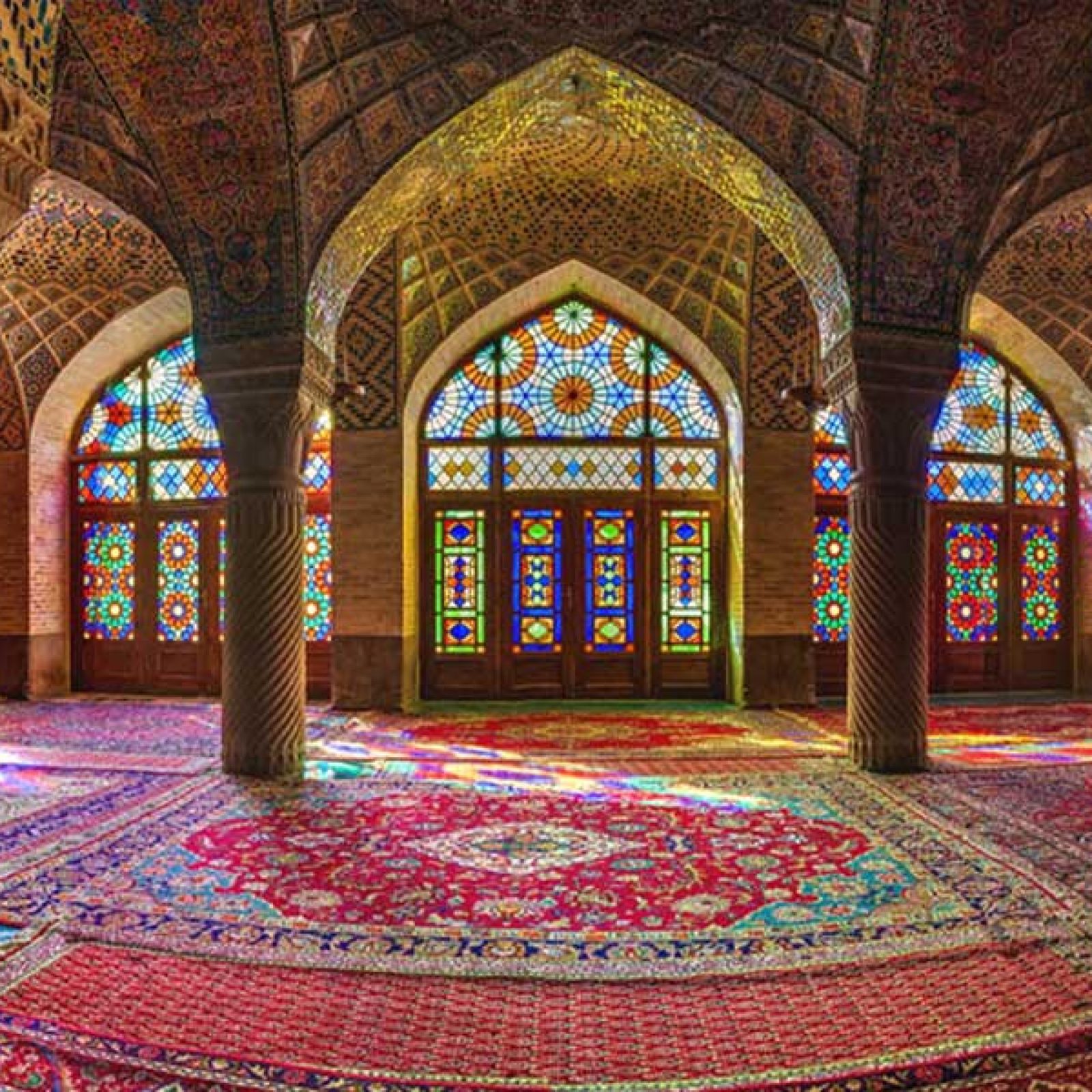
No building sums up Shiraz better than the Nasir al-Mulk Mosque, known the world over as the Pink Mosque. Built in the late 19th century during the Qajar era, its western prayer hall is fronted by tall stained-glass windows, and for an hour or two after sunrise the low sun pours through them, scattering pools of ruby, emerald and gold across the carpets and pillars. It is genuinely one of the most photographed interiors in Iran, so arrive early — soon after opening — to catch the light at its best and beat the crowds. Even without the sunrise show, the courtyard's rose-tinted tilework is a marvel in its own right.
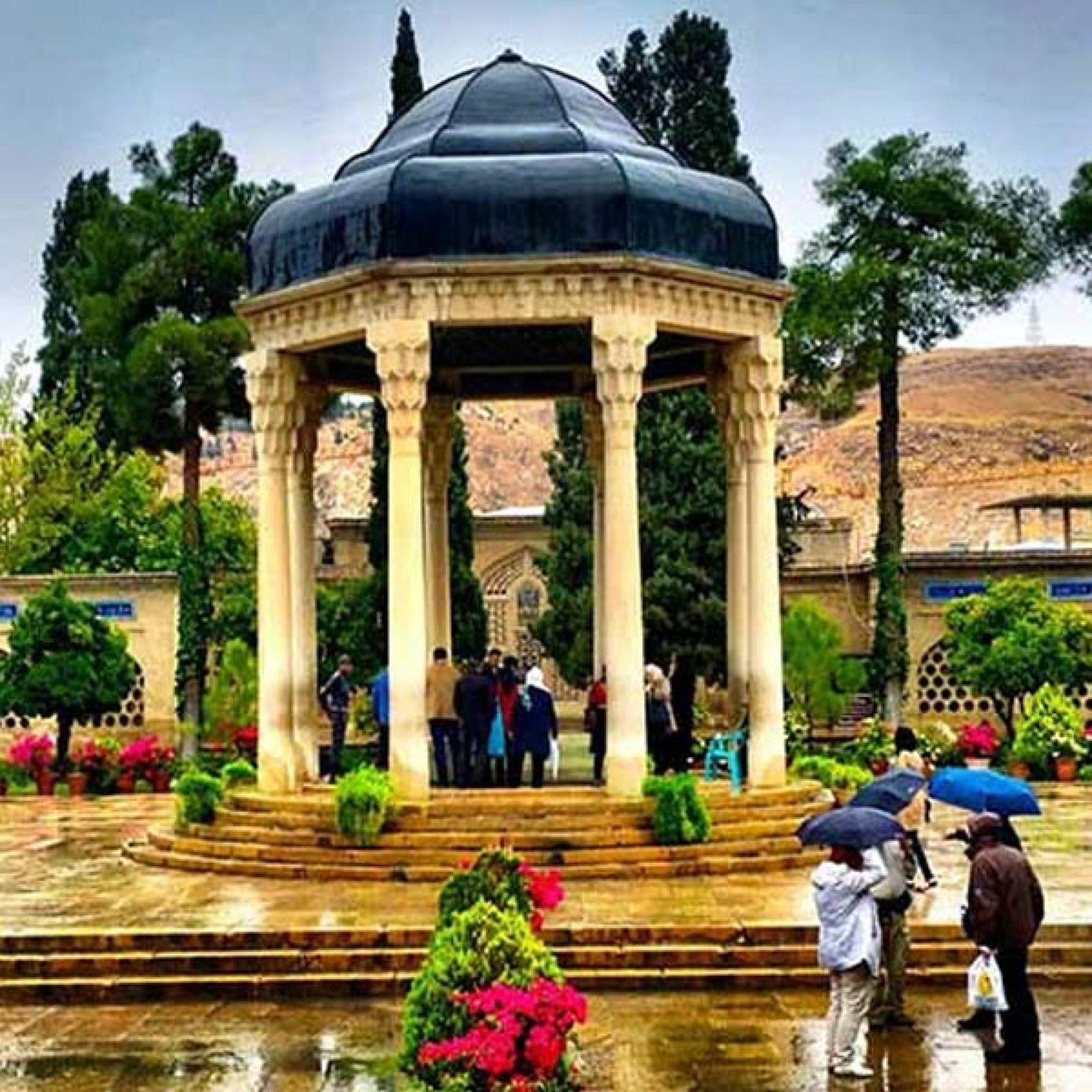
Shirazis will tell you the city runs on verse. The tomb of Hafez — a graceful open pavilion set in rose gardens — is the most visited place in the city, and it is far more than a monument: Iranians come to sit, read, and open his Divan at random in search of guidance, a tradition known as fal-e Hafez. A short drive away lies the tomb of Saadi, another giant of Persian literature, in its own tranquil garden with an azure dome. Visiting both, especially in the soft light of late afternoon, is one of the most authentic experiences the city offers — and a window into how deeply Iranians live alongside their poets.
In Shiraz, a garden is never just a garden, and a poem is never only words — they are the city's way of remembering itself.
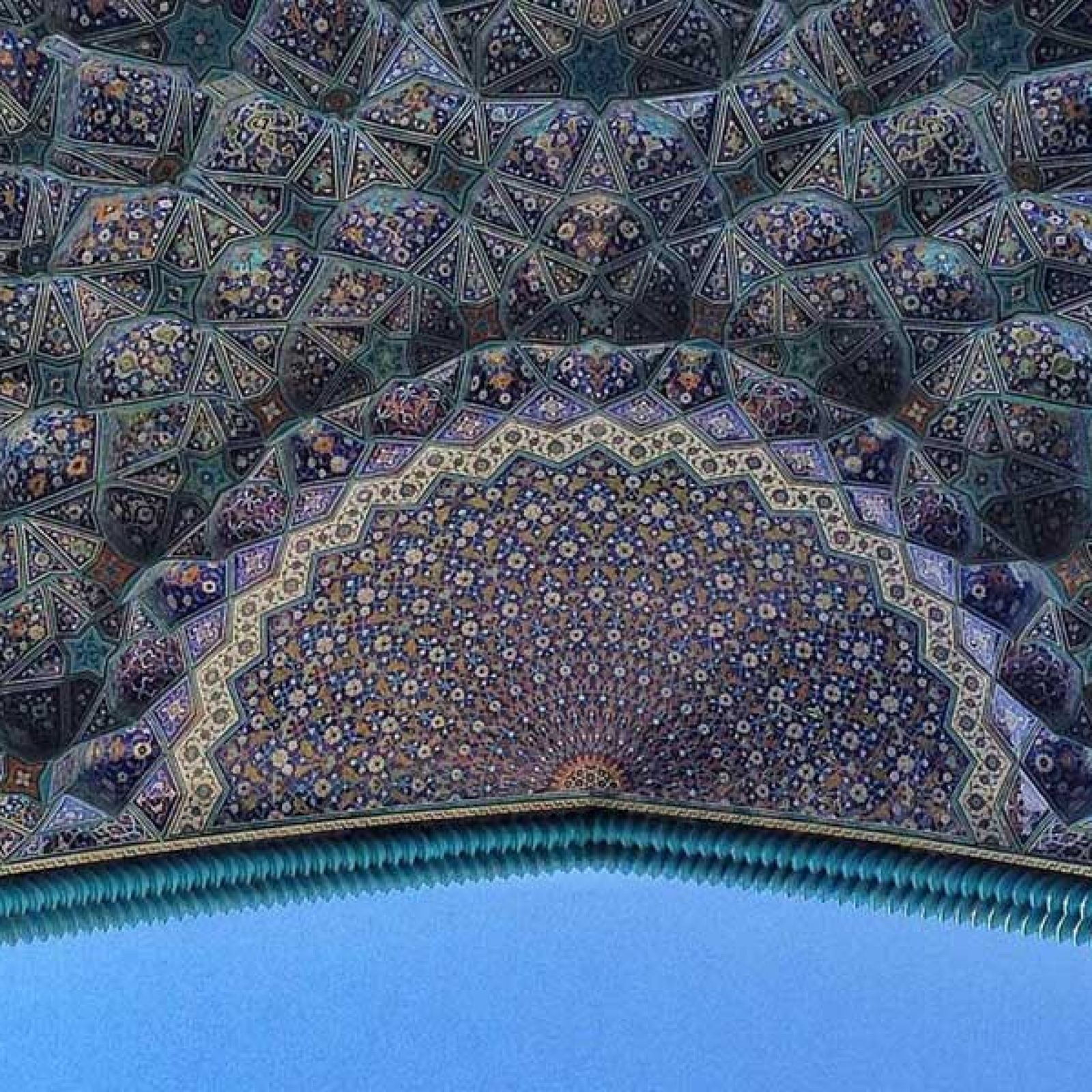
Shiraz is a city of paradise gardens, and the finest is Eram Garden, a UNESCO-listed Persian garden of towering cypresses, flowing water channels and a delicate Qajar pavilion. In the historic core, Karim Khan's legacy is everywhere: his 18th-century citadel (the Arg of Karim Khan) with its leaning tower and round bastions, and the magnificent Vakil complex — a mosque, a bathhouse and one of Iran's great covered bazaars. Wandering the Vakil Bazaar's vaulted lanes, past carpets, spices and heaps of saffron, is the best way to feel the city's rhythm; browse our bazaar experiences for more. After dark, don't miss the mirrored splendour of the Shah Cheragh shrine, whose interior glitters with millions of tiny glass fragments.
Shiraz is also the gateway to Persepolis, the ceremonial capital founded by Darius the Great in 518 BCE and today a UNESCO World Heritage Site. Just 45 minutes from the city, its monumental staircases, carved reliefs and towering columns are the single most powerful reminder of the reach of the ancient Persian Empire. Combine it with the nearby royal tombs of Naqsh-e Rostam, carved high into a cliff face, for a half-day that spans a thousand years of history. These sites anchor our Classic Persia journeys, which link Shiraz with Isfahan and Yazd.
Spring — roughly mid-March to May — is the loveliest time to visit, when Shiraz's gardens bloom, the roses open and daytime temperatures sit comfortably between about 15 and 25°C. Autumn is a fine second choice; summers are hot and dry, and winters mild but cooler. Plan on two full days to do the city justice, plus a half-day for Persepolis. Shiraz has its own international airport and connects easily by road or air with Isfahan, Yazd and Tehran, making it a natural start or finish for a grand tour. For visas, money, dress and other essentials, see our travel FAQ.
Shiraz asks to be savoured slowly — a mosque at dawn, a garden at dusk, a poem read aloud between the two. Tell us your dates and we'll build a private, unhurried itinerary around the city and its wonders: plan my trip.
Published by Arian Tour — Iran travel specialists. Opening hours, seasonal light and site access can change; we confirm every detail when planning your trip.
 Plan Your Visit
We'll craft a private, tailor-made itinerary around the city's mosques, gardens and the ruins of Persepolis.