
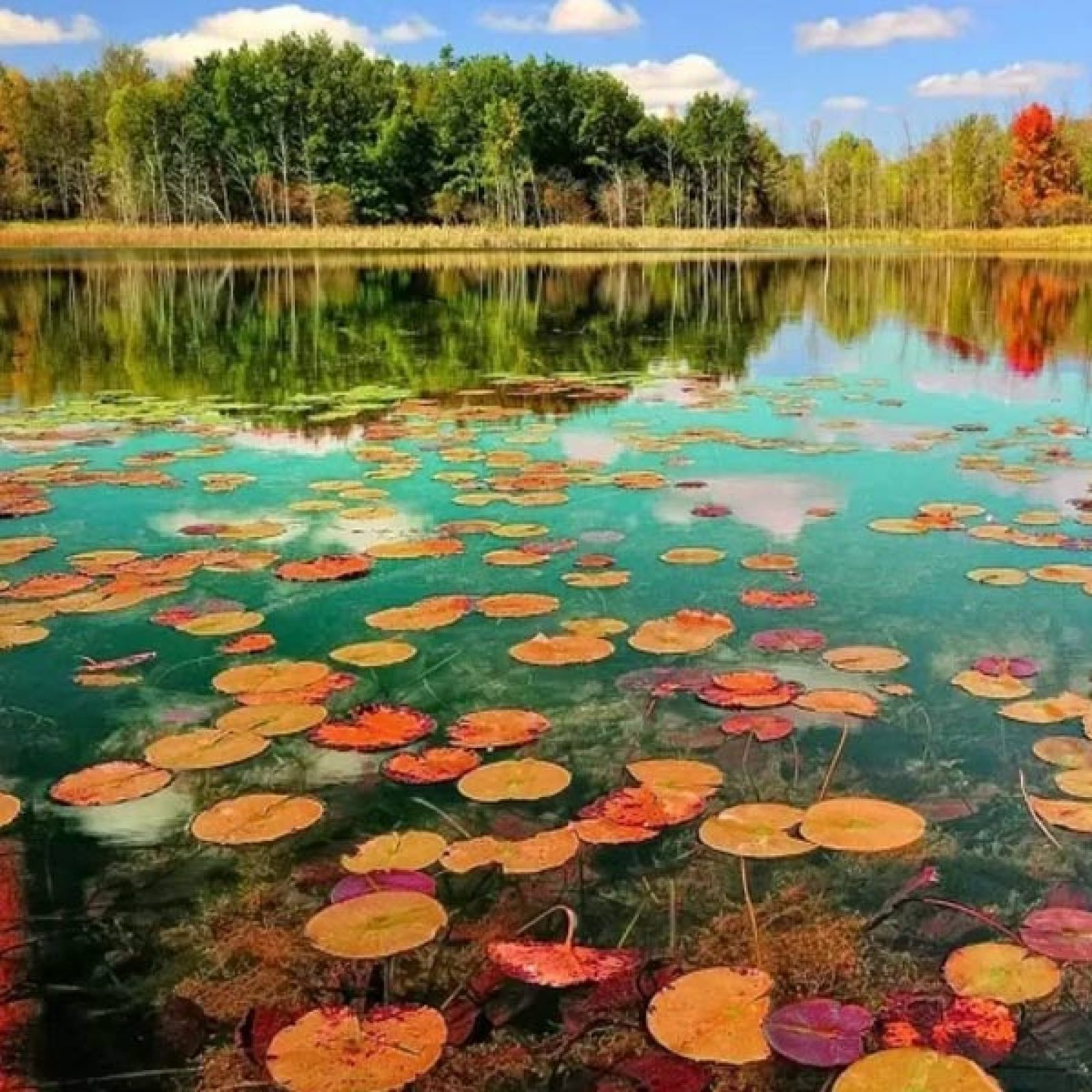
Iran's rainiest, greenest city is also its undisputed food capital — welcome to the gateway of the Caspian north.
Ask an Iranian where to eat best, and the answer is almost always the same: Rasht. The capital of Gilan province sits on the lush plain between the Alborz Mountains and the Caspian Sea, about 320 kilometres northwest of Tehran — a scenic four-hour drive through the Sefidrud valley. Rain falls here more generously than anywhere else in urban Iran, and the reward is a landscape of rice paddies, tea terraces and deep green forest that feels like another country after the deserts of the plateau. You'll find Rasht and its surroundings among our northern destinations.
Rasht is the only Iranian city recognised by UNESCO as a Creative City of Gastronomy, and its kitchens live up to the title. Gilaki cuisine is built on fresh herbs, garlic, walnuts, smoked aubergine and the sour notes of pomegranate and bitter orange. Order mirza ghasemi (smoky aubergine with tomato, garlic and egg), baghali ghatogh (fava beans simmered with dill), or the region's beloved sour kebab, kabab torsh. Even Iran's most celebrated stew has roots here:
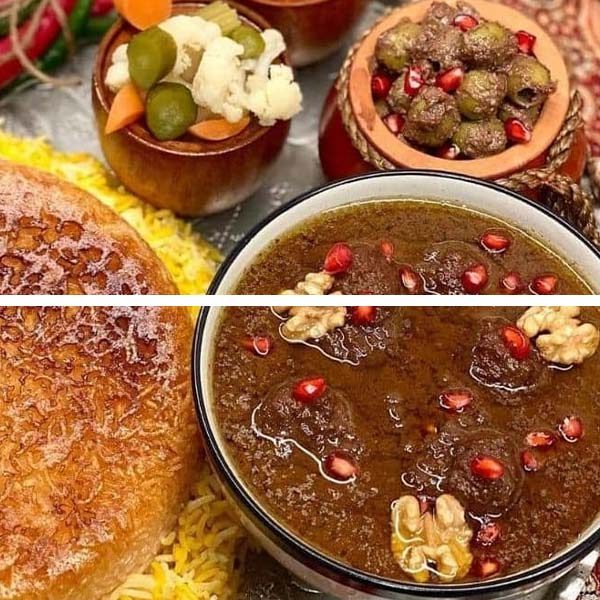
The best introduction is the Rasht Grand Bazaar, a lively open-air market where farmers from surrounding villages sell smoked fish, olives, fresh herbs and homemade pickles, and vendors famously sing to advertise their produce. It's one of the most atmospheric markets in Iran — a natural stop on our bazaar experiences, and food lovers can go deeper with a hands-on Gilani cooking session through our culinary experiences.
Central Rasht gathers around Municipality Square, where the white clock-towered city hall — a legacy of the town's early-twentieth-century cosmopolitan era — glows after dark. Nearby, the house of Mirza Kuchak Khan, leader of the Jangal (forest) movement, tells the story of Gilan's independent spirit. On the city's edge, the open-air Gilan Rural Heritage Museum reassembles traditional wooden houses from across the province in a forest setting — an easy half-day that explains everything you'll see on the road.
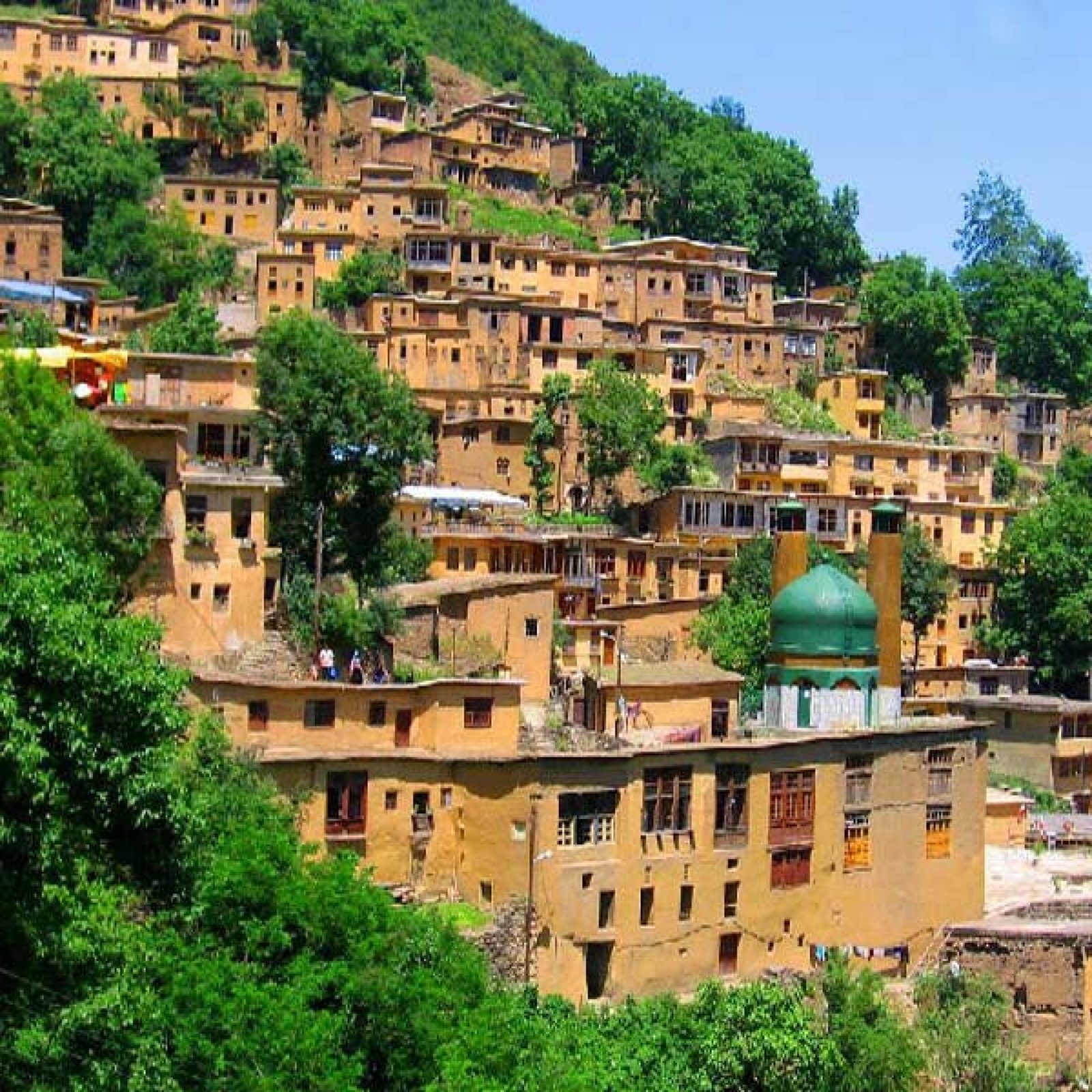
Rasht is the perfect base for the Caspian region's most loved sights. An hour southwest, the terraced village of Masuleh climbs a misty mountainside so steeply that the roofs of one row of houses form the walkway of the next.
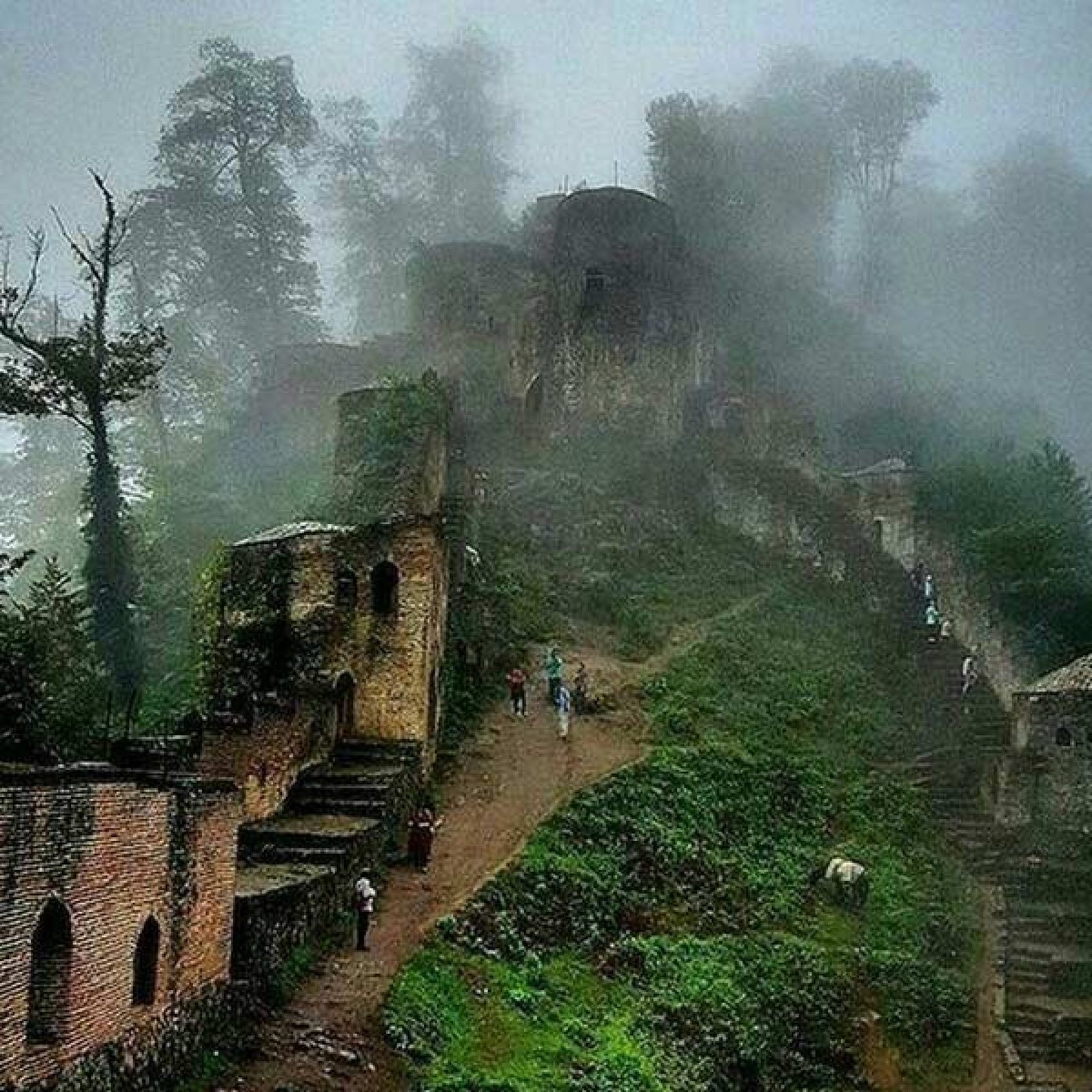
Near Fuman, a forest trail of roughly a thousand stone steps leads up to Rudkhan Castle, a sprawling medieval brick fortress strung along a mountain ridge — bring good shoes and take it slowly.
And half an hour north lies Bandar-e Anzali, where wooden boats glide through the Anzali Lagoon past reed beds and, in late summer, carpets of lotus flowers — one of the finest birdwatching wetlands on the Caspian. All three feature on our Nature & Caspian journeys.
In Gilan the table is the destination: every road ends in a village kitchen, a smoking aubergine and a pot of tea.
Spring and autumn bring the gentlest weather; summer is warm and humid but noticeably cooler than central Iran, and even winter has its charm, with mist on the tea hills and the bazaar at its cosiest. Pack a light rain layer in any season — this is Iran's rain capital, and the greenery is the proof. Practical questions about visas, money and dress are answered in our travel FAQ.
Rasht pairs beautifully with Qazvin and the Alamut valley on the way from Tehran, or with a slow drive east along the Caspian shore. Tell us your dates and appetite, and we'll fold Gilan's green hills and great tables into a private itinerary made just for you: plan my trip.
Published by Arian Tour — Iran travel specialists. Opening hours, road conditions and seasonal access can change; we confirm every detail when planning your trip.
 Plan Your Visit
Private, tailor-made journeys to Rasht, the Caspian coast and the green north — built around the season and your appetite.