
In Iran a glass of tea is never just a drink — it's a welcome, a pause, and a conversation waiting to happen.
Step into any Iranian home, office or shop and within minutes a small tulip-shaped glass of amber tea will appear in front of you. Tea — chai in Persian — is the country's true national drink, poured from breakfast to well past midnight and offered as the first and warmest gesture of hospitality. To understand Iran, it helps to understand its tea: where it came from, how it's brewed, and the teahouses that have kept it at the centre of social life for generations.
Tea reached Persia along the Silk Road from China, and by the era of the Safavid court it had become a fashionable luxury sipped in the great cities. For a long time, though, coffee held its own — it was only over the nineteenth and early twentieth centuries that tea overtook it to become the everyday drink of the whole country. The turning point has a name: Mohammad Mirza Kashef al-Saltaneh, a diplomat who studied in Paris and, the story goes, travelled to India posing as a French merchant to learn the closely guarded tea trade. He brought saplings and seeds back to Iran and planted them in the humid, green north. Today he is remembered as the father of Iranian tea, and his mausoleum in the town of Lahijan houses a tea museum. Those same hillsides above the Caspian — around Lahijan in Gilan — still supply much of the nation's tea, and the plantations are a serene stop on our northern destinations.
The heart of the ritual is the samovar, traditionally a two-tier arrangement: a strong brew steeps in a pot on top while water stays near-boiling below, so a glass can be diluted to each drinker's taste — pale (kam-rang) or dark and strong (por-rang). Tea is served in a small clear glass called an estekan, chosen so you can admire the colour. What surprises many first-time visitors is the sugar. Rather than stirring it in, Iranians place a lump of qand — rock sugar chipped from a sugarloaf — between the teeth and sip the hot tea straight through it. Loaf sugar is preferred to modern cubes precisely because it dissolves slowly. Depending on the region and the season, the pot may be scented with cardamom, rose, cinnamon or a dried lime, but a great many Iranians take theirs plain and unhurried.
To refuse the first glass is almost unthinkable; to accept it is to step, however briefly, into someone's world.
For centuries the chaikhaneh, or teahouse, has been far more than a place to drink. These were the community's living rooms — spaces where men gathered to trade news and opinions, play backgammon, listen to a storyteller perform the epics in the old art of naqqali, and let an afternoon dissolve into conversation and poetry. Many of the most atmospheric survive in restored caravanserais or beneath the brick vaults of the great covered bazaars, their walls hung with old photographs and their air thick with the scent of tea and tobacco. Lingering in one is one of the most rewarding things you can do in Iran, and it pairs naturally with a wander through the historic bazaars.
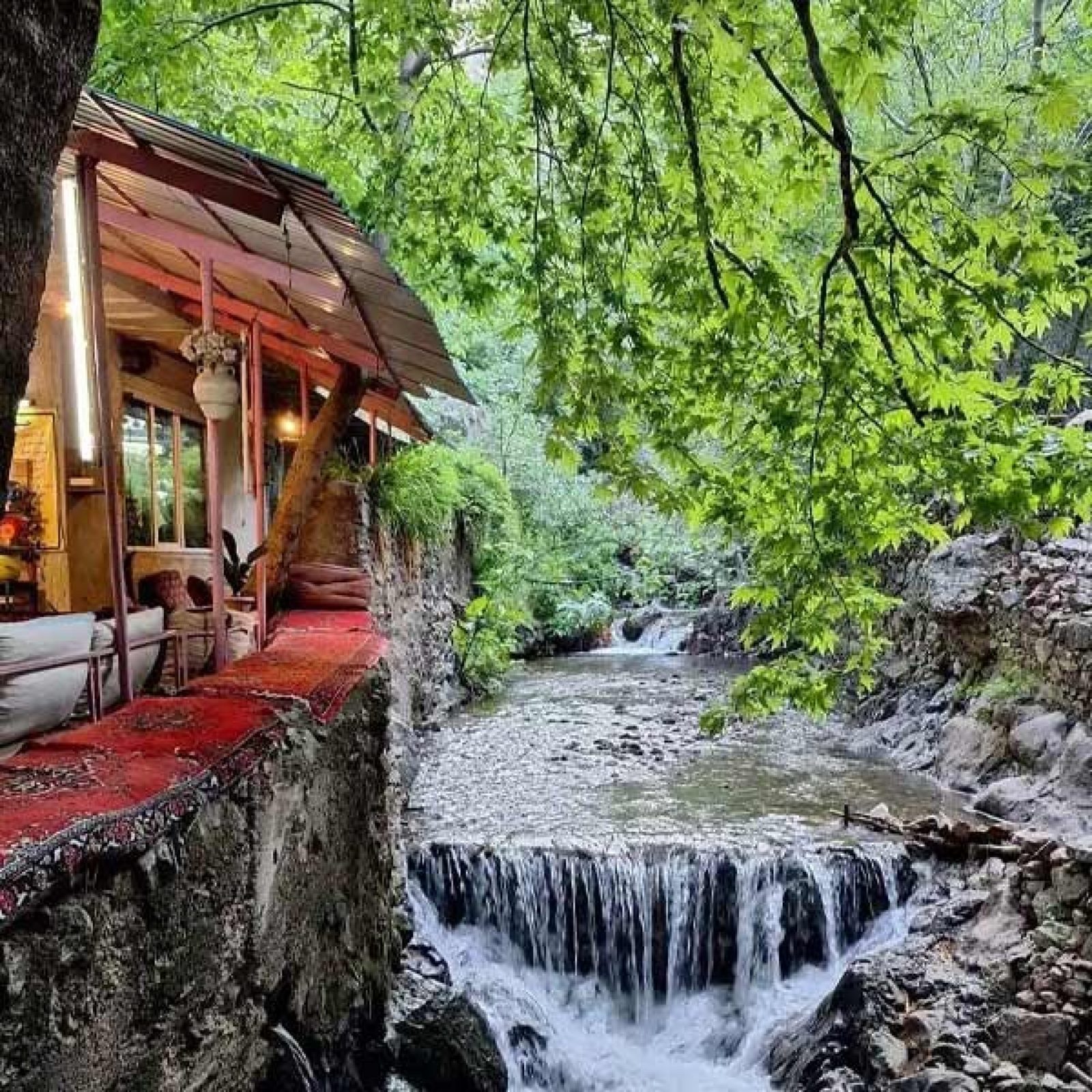
Some settings make the glass taste even better. Above Tehran, the mountain village of Darband is lined with terraced teahouses that step down beside a rushing stream, a favourite weekend escape where families order tea and grilled snacks in the cool air. In Isfahan, teahouses tucked around the Grand Bazaar and the great square offer a shaded pause between monuments. And in the tea country of Gilan, sipping a glass of local brew among the misty green rows above the Caspian is a memory in itself. We build these unhurried moments into our Food & Bazaars journeys and our tasting-led culinary experiences.
More than any monument, it is this small daily ceremony that travellers remember: the glass pressed into your hands the moment you arrive, the refills you never quite finish, the sugar held between the teeth, the way time slows around a shared pot. Persian tea is hospitality made visible — generous, patient and endlessly renewed. For practical questions about travelling in Iran, from etiquette to what to wear, see our travel FAQ, and when you're ready to taste it all for yourself, plan my trip and we'll pour the first glass.
Published by Arian Tour — Iran travel specialists. Customs, opening hours and access to teahouses and plantations can vary; we confirm the details when planning your trip.
 Plan Your Visit
Let us weave teahouses, bazaars and Persian kitchens into a private, tailor-made journey shaped around you.