
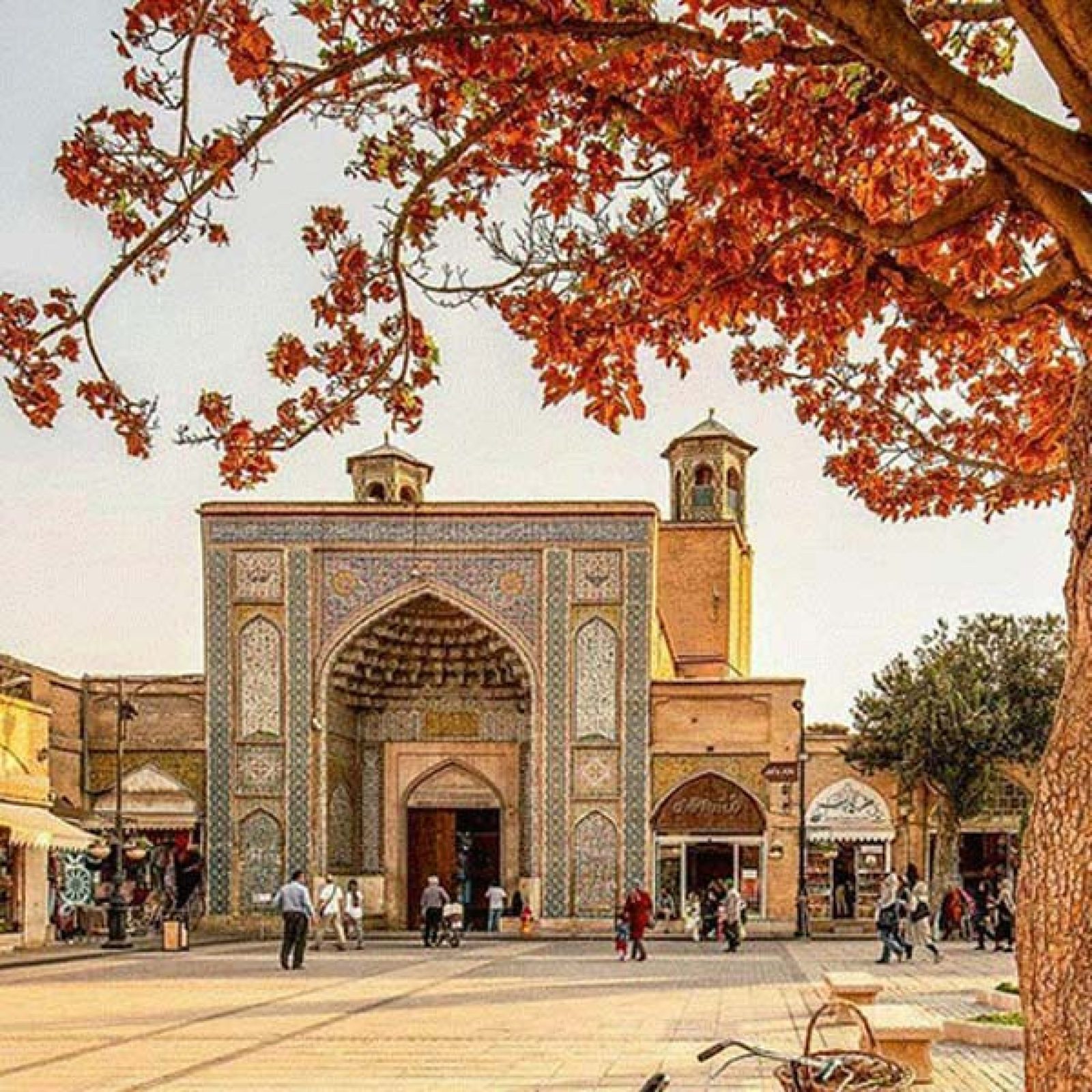
A handful of Farsi words — and one famously charming custom — will open more doors in Iran than any guidebook.
Few things transform a trip to Iran like speaking even a little Persian. Iranians are famously hospitable to visitors, and the moment you offer a warm salām instead of a hello, faces light up, tea appears, and conversations begin. The good news: Persian — Farsi to its speakers — is gentler on beginners than its elegant script suggests. There are no tones and no gendered words, and a dozen phrases cover most travel moments. Here are the ones worth learning before you land, and how to use them well.
Begin everywhere with salām (hello) — it works at any hour, for anyone. Follow with chetori? (how are you?) among friendly company, or the fuller hāl-e shomā chetor ast? when speaking politely. When you're introduced, khoshbakhtam (pleased to meet you) is the graceful reply, and when you leave, khodā hāfez (goodbye, literally "may God protect you"). Morning people can add sobh bekheir (good morning). Try these in the tea houses of Isfahan or the lanes of Shiraz and watch strangers become hosts.
Persian has an embarrassment of ways to say thank you, and Iranians use them in joyful abundance. The easiest is the borrowed merci; a step warmer is mamnoon, and kheyli mamnoon (thank you very much) warmer still. For "please", use lotfan when asking, and befarmāid when offering — a lovely all-purpose word that means "please, go ahead, help yourself". If someone thanks you, answer khāhesh mikonam (you're welcome). Sprinkle these generously; nothing is over-polite in Iran.
In Iran, courtesy is a national art form — and taarof is its masterpiece.
Sooner or later you will meet taarof, Iran's celebrated ritual of politeness. A shopkeeper may refuse your money — ghābel nadāre, "it's not worthy of you" — or a new acquaintance may insist you come to dinner. The code is simple: decline gently two or three times; if the offer is repeated with real insistence, it is sincere and may be accepted. As a guest you are forgiven every misstep, but knowing the dance exists turns confusing moments into delightful ones. It's a favourite topic on our bazaar walks, where taarof happens live at every stall.
Shopping is where a little Persian pays for itself, sometimes literally. Ask in cheghadr ast? or simply cheghadr? (how much?), and if the number startles you, smile and try gerun ast! (that's expensive!) — the time-honoured opening move of friendly bargaining. Arzun-tar? (cheaper?) keeps the game going. Haggling in Iran is good-natured, never aggressive, and works best over carpets, termeh textiles and handicrafts rather than food. Our Food & Bazaars journey builds in plenty of time to practise.
For directions, kojāst? (where is...?) attached to any place name works wonders — dastshui kojāst? (where is the bathroom?) being the most urgent version. Bebakhshid (excuse me) politely opens any request, and nemifahmam (I don't understand) plus Engelisi baladid? (do you speak English?) will summon help; in tourist cities someone nearby almost always does. For real trouble, komak! means help. Numbers, taxi etiquette and money questions are covered in our travel FAQ.
Persian is forgiving. Vowels are pure and open — the long ā in salām sounds like the a in "father" — and stress usually lands near the end of a word: sa-LĀM, mam-NOON. The kh is the soft rasp of Scottish "loch", and that's the hardest sound you'll meet. Don't aim for perfection; aim for warmth. Every attempt, however wobbly, is received as a compliment to the culture — and often rewarded with tea.
Learn ten words, and Iran will teach you a hundred more. Travel with us and your guide will translate everything else — while making sure you leave saying kheyli mamnoon like a local: plan my trip.
In hotels, tourist sites and among younger city dwellers, yes — you will usually find someone with workable English in Tehran, Isfahan, Shiraz and other visited cities. In bazaars, taxis and smaller towns it is far less common, which is exactly where a few Persian phrases, a translation app and some patience carry you a long way. On our guided tours, your English-speaking guide handles everything else.
No. Persian — called Farsi by its speakers — is an Indo-European language, related to the same family as English, and completely different from Arabic in grammar and origin. It is written in a modified Arabic script, which is why the two are often confused. Greeting Iranians in Persian rather than Arabic is a small courtesy that is always warmly noticed.
Taarof is Iran's elaborate ritual of politeness: offers made from courtesy that are not always meant literally, such as a taxi driver initially waving away your fare. The custom is to decline gently two or three times; if the other person insists, the offer is genuine. As a visitor you are not expected to master it — simply insist politely on paying, and accept generous hospitality graciously when it is clearly sincere.
It is one of the easier languages in the region for English speakers. Persian has no tones, no gendered nouns, and most sounds exist in English. Stress usually falls near the end of a word, and the friendly reception you get for trying makes every small mistake worthwhile.
Published by Arian Tour — Iran travel specialists. Transliterations are approximate; regional accents and informal speech vary, and every phrase here is understood countrywide.
 Plan Your Visit
Join a tour where your guide speaks every language that counts — including the language of Persian hospitality.