
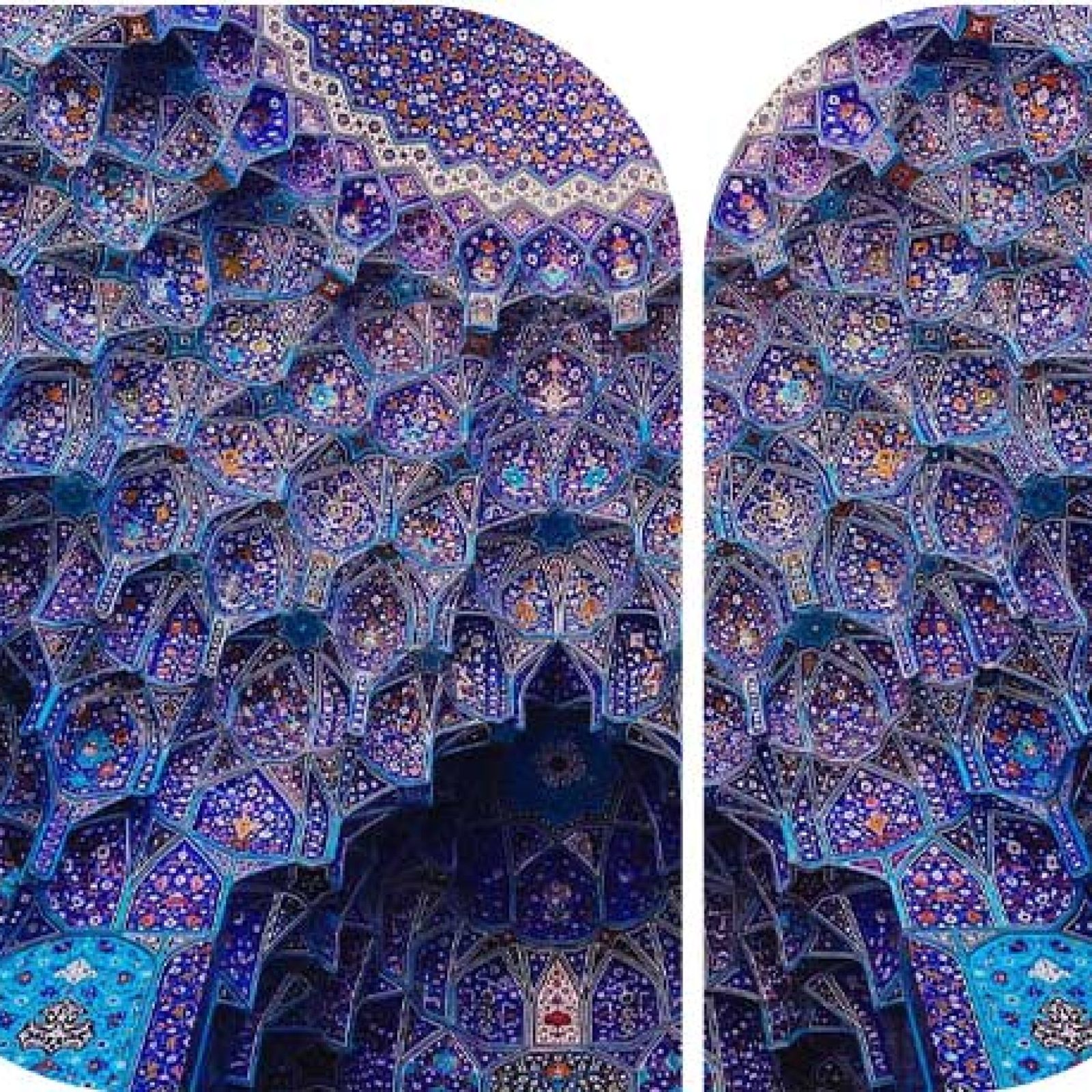
Stars, knots and endless arabesques — how Persian craftsmen turned mathematics into beauty, and where to stand beneath it.
Travel in Iran and you slowly realise the whole country is patterned. It is on the domes above you and the carpets beneath you, on the lid of a small wooden box in a Shiraz workshop, on the shawl folded over a grandmother's arm, in the brickwork of a caravanserai wall. Persian artists spent a thousand years working out how a handful of shapes could repeat forever without ever quite repeating themselves — and then covered a country in the result. This is a slow, photo-led wander through that geometry, and a few places where it is at its most beautiful.
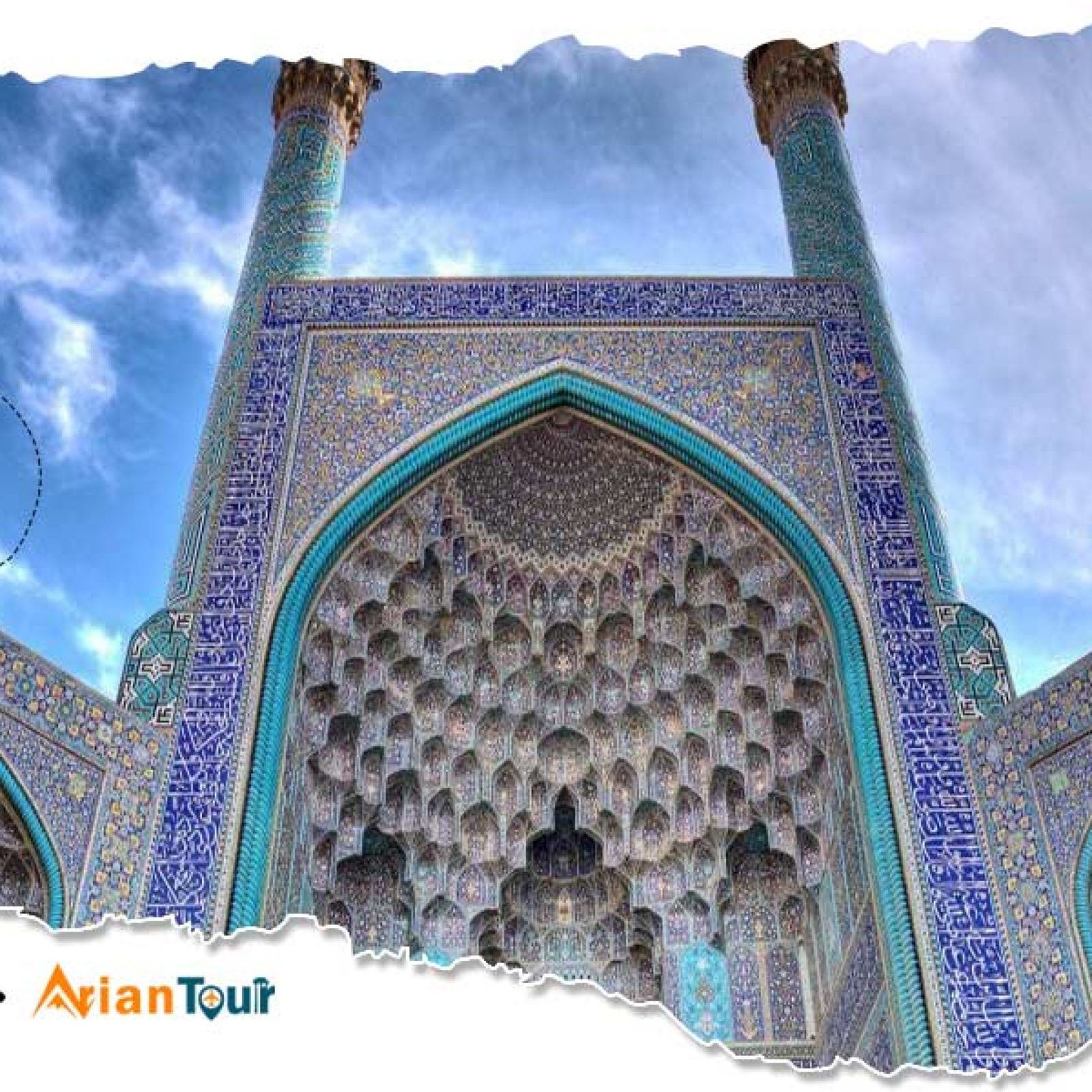
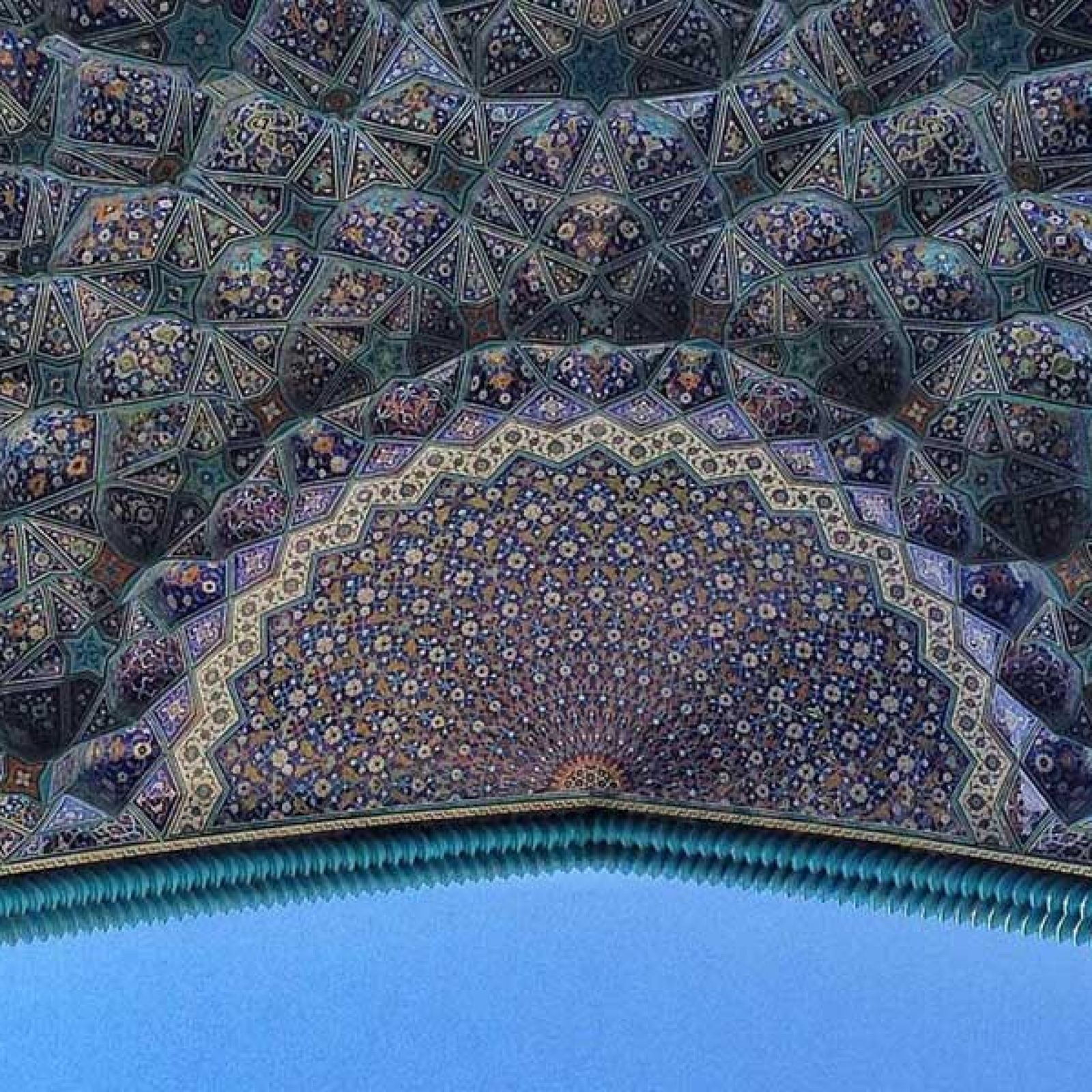
The Persian word girih means "knot," and it gives its name to the interlacing star-and-polygon patterns that spread across Iranian architecture from around the 12th and 13th centuries onward. Craftsmen built them from a small family of repeating shapes — decagons, elongated hexagons, pentagons, rhombi and the little "bow tie" — laying out strapwork that could be scaled up a wall or shrunk into the corner of a panel. The results are so mathematically sophisticated that modern researchers studying the 15th-century Darb-e Imam shrine in Isfahan found tilings there that anticipate ideas Western mathematics only formalised in the 1970s. Stand close to a wall in Isfahan and you can watch a single star quietly generating an entire universe. It is one of the great pleasures of our Isfahan destinations.
Persian pattern is never decoration for its own sake — it is an argument that the world is ordered, and that the order is beautiful.
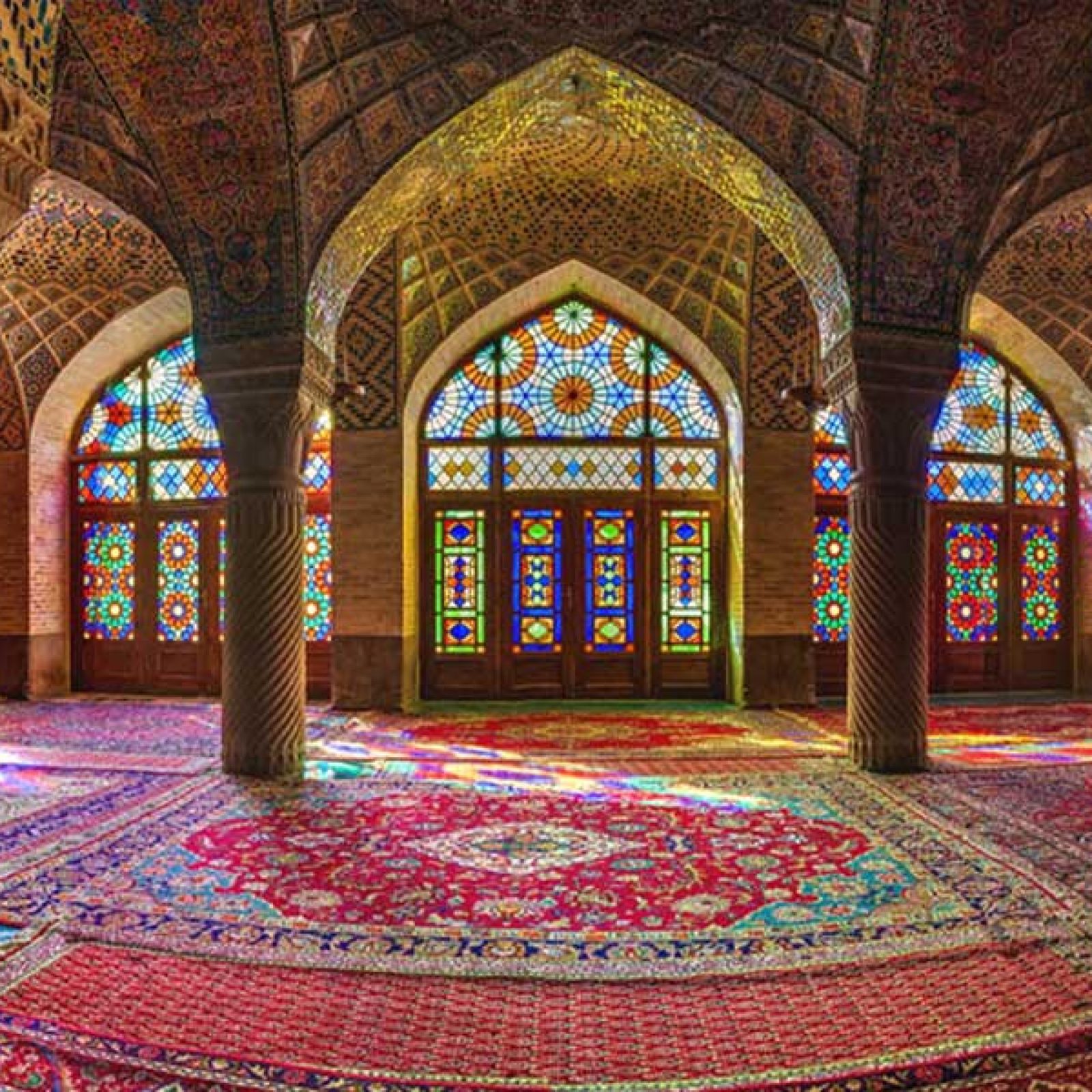
Pattern in Iran is inseparable from light. At the Nasir al-Mulk Mosque in Shiraz — the famous "Pink Mosque" — the morning sun pushes through banks of stained glass and lays a second, moving pattern of ruby and sapphire across the carpets and the tiled columns, so the room is briefly wearing two designs at once. Come early, before nine, and stay long enough to watch the colours travel. The old city of Shiraz keeps this soft, ornamental character all day; you'll find its highlights among our Shiraz destinations.
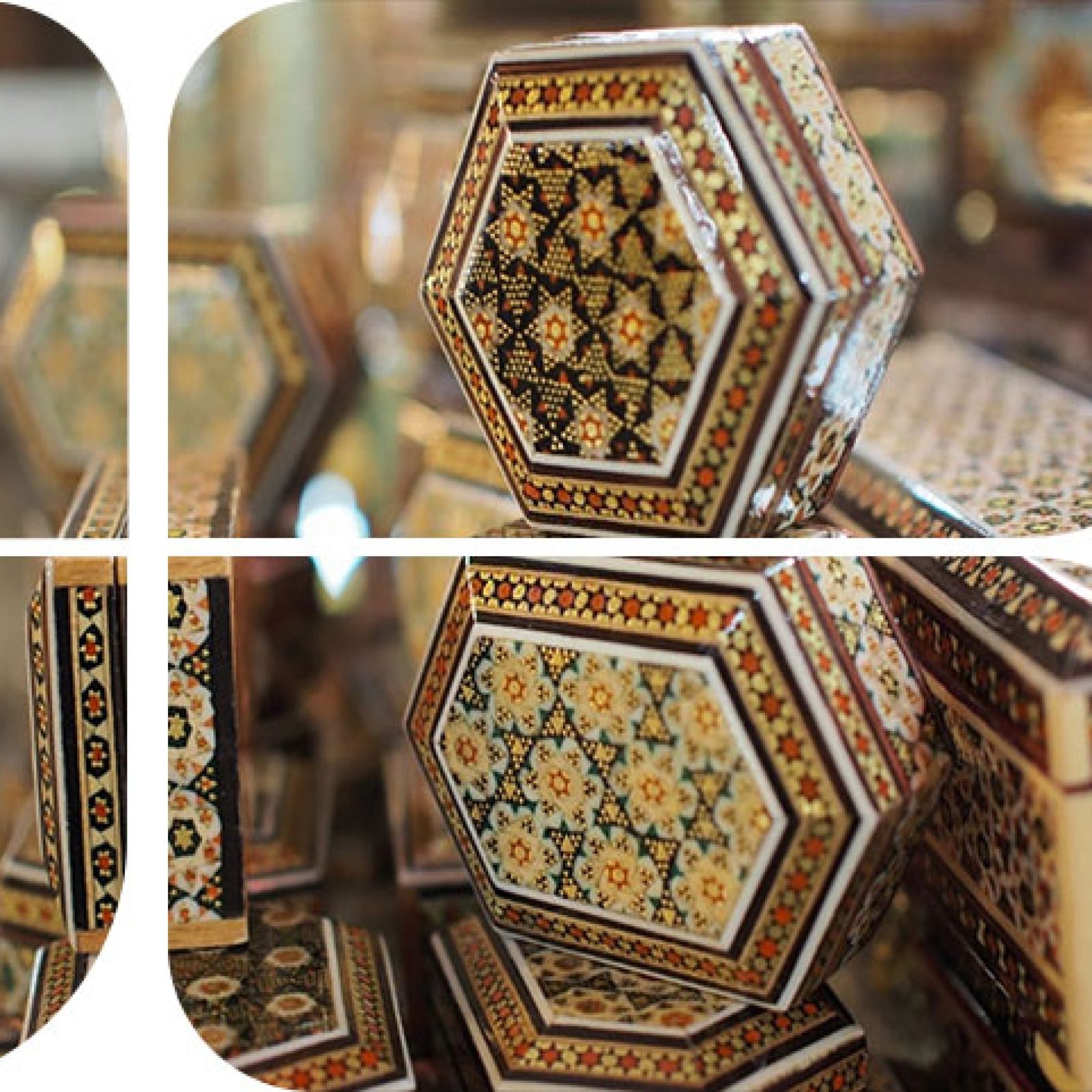
The same instinct shrinks down beautifully. Khatam-kari is the Persian art of marquetry: hair-thin rods of wood, brass and bone are bundled, glued and sliced to produce tiny six-pointed stars, then set side by side over a box, a frame or a chessboard until the surface looks like a woven textile. A single small jewellery box can carry many thousands of individual pieces. Shiraz and Isfahan have been the great centres of the craft since Safavid times, and watching a master cut and lay the mosaic is quietly hypnotic — one of the workshop visits we build into our craft experiences.
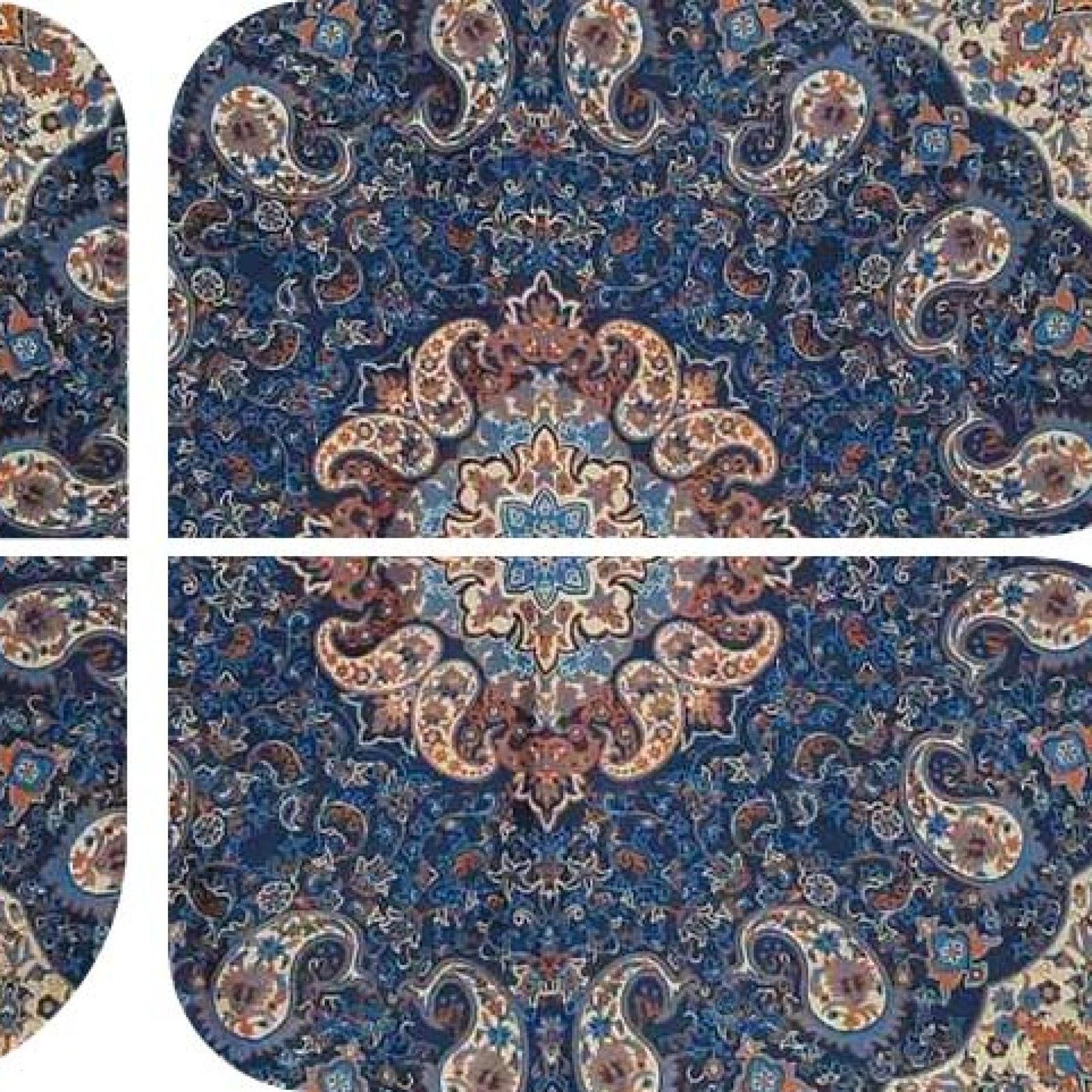
Iran's other great pattern tradition is woven. Termeh, the luxurious hand-woven cloth most associated with Yazd, is dense with the curling teardrop motif Persians call boteh — the shape the rest of the world came to know as paisley, after the Scottish town that copied it. Spread as a table runner, wrapped around a gift or laid over a bride's chest of belongings, termeh is pattern doing everyday work. The same motif reappears on carpets, in tile spandrels and on painted ceilings, which is exactly the point: in Persian design, a good shape travels between materials.
Not all of it is glazed and glittering. Some of the most satisfying Iranian pattern is made of nothing but baked brick, laid in herringbones, lattices and interlocking knots so that the sun does half the work — a wall that is plain at noon and spectacular at five o'clock. Look for it on minarets, caravanserai façades and the vaulted roofs of the covered markets, where small domes drop shafts of daylight onto spice sacks and stacked carpets below. Wandering with a camera and no particular plan through Isfahan's or Shiraz's arcades is one of the best hours you'll spend in the country, and the heart of our bazaar experiences.
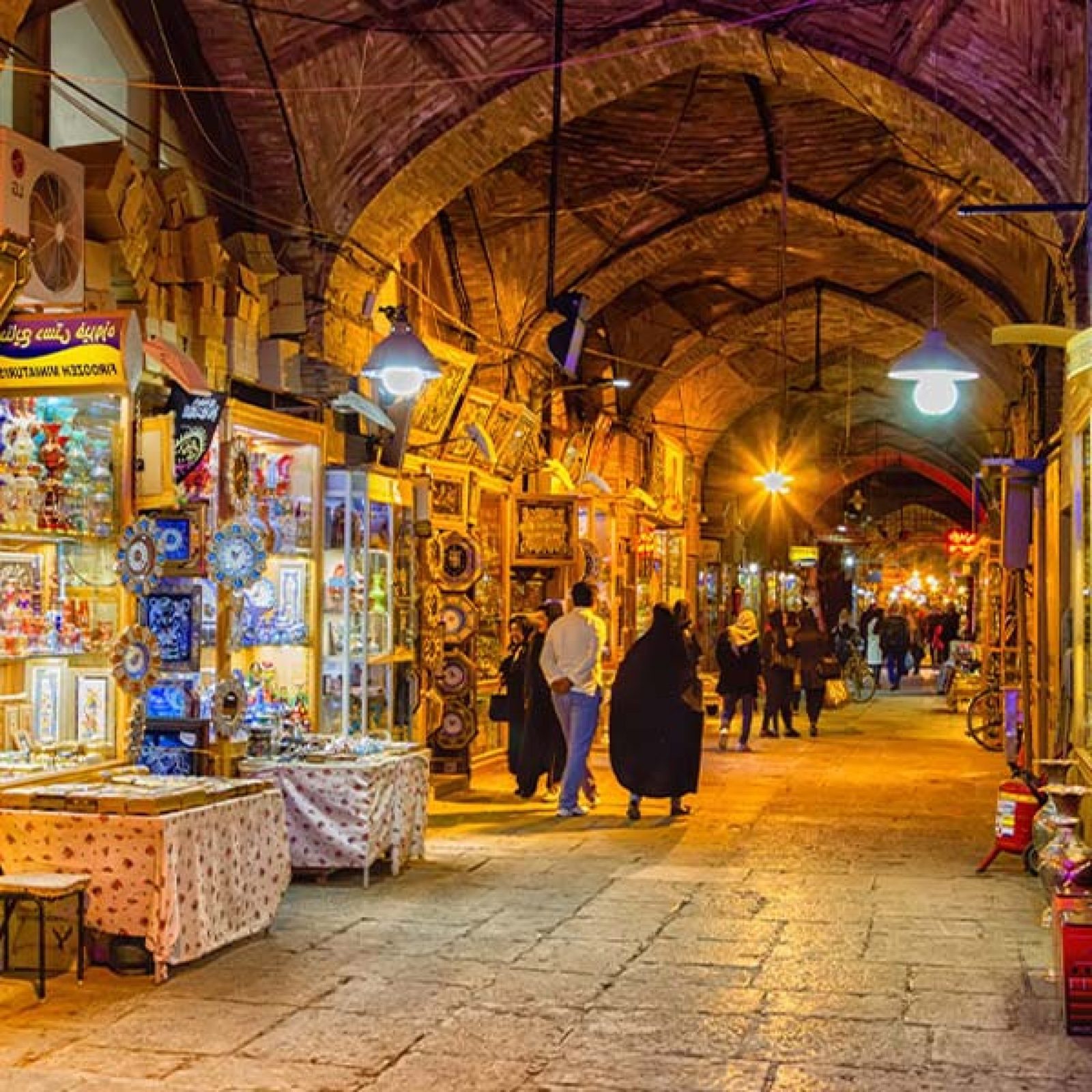
A few things help. Shoot the detail before the wide shot: a single tiled spandrel or one corner of a carpet often says more than the whole courtyard. Look for repetition broken by something human — a doorway, a hand, a pair of shoes at the threshold. Courtyard pools double every pattern for free, so it is worth circling a building until you find the reflection. And go early, when the light is soft and the courtyards are still empty. For seasons, opening hours and what to wear inside religious sites, our travel FAQ covers the practical ground, and the classic pattern cities strung together make up our Classic Persia route.
If this is the Iran that draws you — tilework, workshops, textiles and slow mornings with a camera — we can build the whole trip around it. Tell us how long you have and what you love, and we'll shape a private, tailor-made itinerary to match: plan my trip.
Published by Arian Tour — Iran travel specialists. Opening hours, workshop visits and access to religious sites can change; we confirm every detail when planning your trip.
 Plan Your Visit
We'll craft a private, tailor-made route through Iran's finest tilework, workshops and bazaars — at your own unhurried pace.