
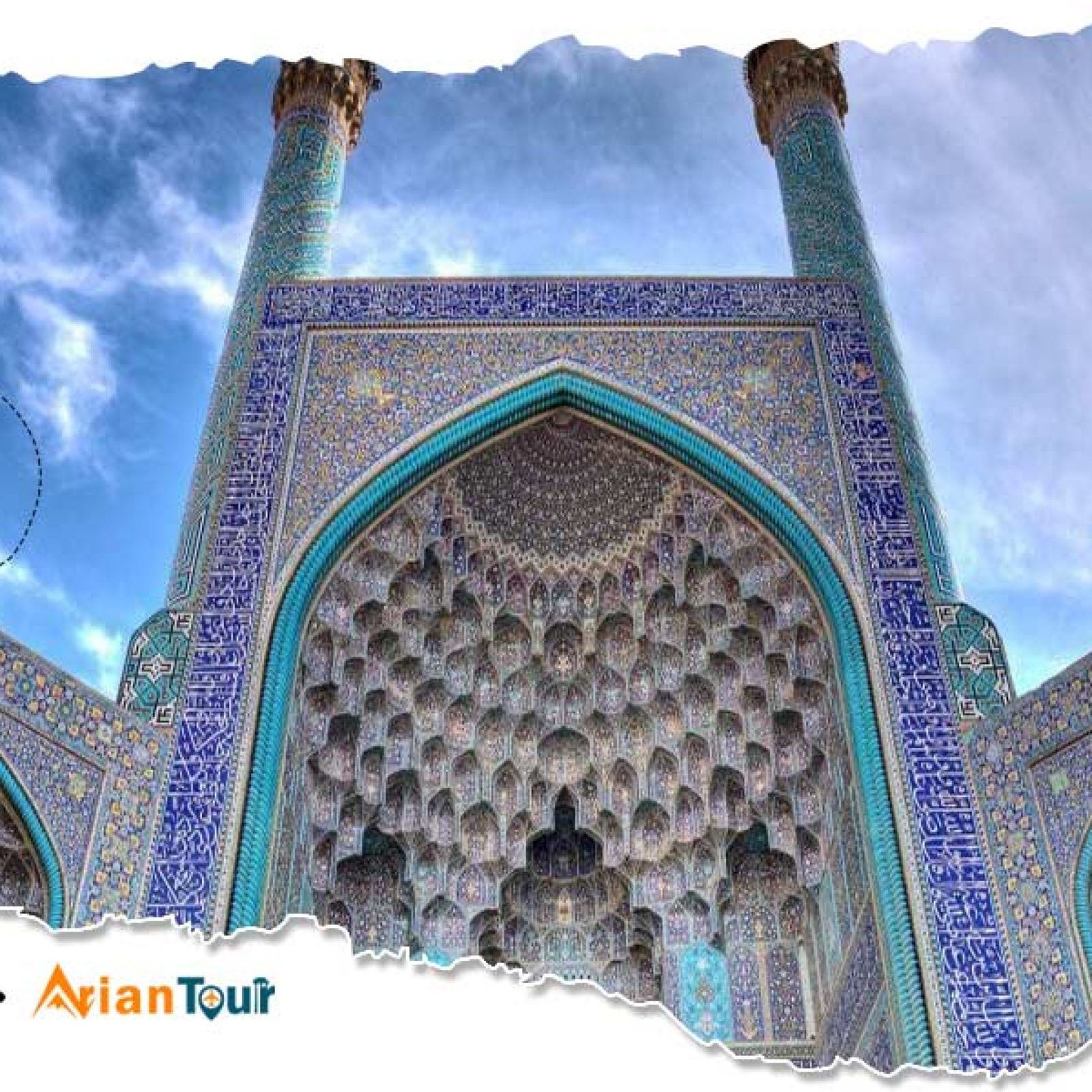
Half the world, the old saying goes, is in Isfahan — a Safavid capital of turquoise mosques, painted palaces and arched bridges over the Zayandeh River.
If you visit only one city in Iran, make it Isfahan. The Persian rhyme Esfahan nesf-e jahan — "Isfahan is half the world" — has stuck for four centuries, and a day among its monuments shows why. As the capital of Shah Abbas I in the early 1600s, the city was rebuilt as a stage for empire: a vast royal square, soaring tiled mosques, garden palaces and graceful bridges, much of it still beautifully intact. This guide walks you through what to see, when to come and how long to stay, so you can plan a trip that does the city justice. You'll find Isfahan among the highlights of our Persian destinations.
Everything begins at Naqsh-e Jahan ("Image of the World") Square, also called Imam Square — a UNESCO World Heritage Site and one of the largest public squares on earth. Four masterpieces face onto it: the Imam (Shah) Mosque to the south, the jewel-like Sheikh Lotfollah Mosque to the east, the Ali Qapu Palace to the west and the gateway to the Grand Bazaar to the north. Entering the square itself is free; the individual monuments charge a modest admission. Give it at least half a day, and try to return after dark when the arcades are lit and Isfahani families come out to stroll.
The Imam Mosque, completed under the Safavids, is a high point of Persian architecture — a mountain of cobalt and turquoise tilework rising above the square. Step inside the main dome chamber and clap once: the famous echo is part of the experience. The entrance portal deliberately turns to align the prayer hall with Mecca, a clever piece of geometry worth pausing over.
Smaller and without a courtyard or minaret, the Sheikh Lotfollah Mosque was built as a private place of worship for the royal household. Its cream-and-rose dome is one of the loveliest interiors in Iran; at certain hours, light falling through the lattice windows traces a peacock-tail of sunbeams across the tiles. Come mid-morning for the best effect.
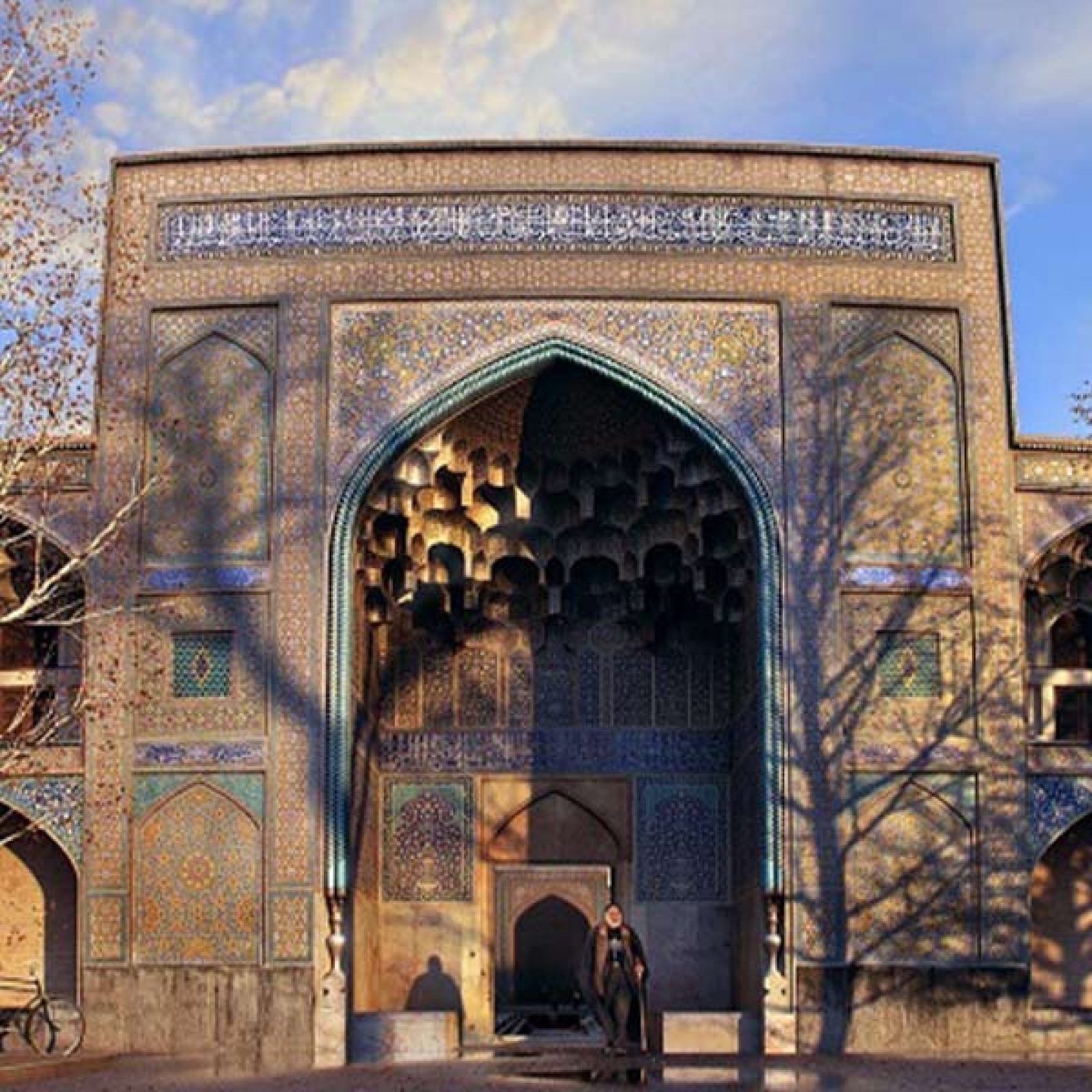
A short walk from the square, the Chehel Sotoun ("Forty Columns") palace sits in a formal garden, its slender wooden columns doubled in a reflecting pool to make twenty appear as forty. Inside are large Safavid frescoes of court banquets and battles. Then make your way down to the Zayandeh River for Isfahan's celebrated bridges — the eleven-arched Si-o-se-pol and the tiered Khaju Bridge, where in the cool of evening locals gather under the arches to sing. The historic Chahar Bagh avenue, laid out as a royal promenade, still threads through this part of the city.
Come to the bridges at dusk: the brickwork glows gold, the arches mirror in the water and the city slows to a hum.
The covered bazaar running off the square is among the oldest and most atmospheric in the country — a warren of caravanserais, courtyards and workshops. Isfahan is Iran's craft capital, famous for khatamkari (intricate marquetry), hand-painted miniatures, engraved metalwork and block-printed cloth. It's the perfect place to watch artisans at work and pick up something made by hand; our craft and bazaar experiences can introduce you to workshops away from the tourist stalls.
Spring (mid-March to late May) and autumn (September to November) are the ideal seasons, with mild, clear days perfect for walking the square and the riverbank. Summer can be hot and dry, while winter is crisp and quiet — cold at night but very doable with a warm layer. Note that mosques may close to visitors during Friday prayers and on religious mourning days, so plan monument visits for weekday mornings. As for length: two full days cover the essentials comfortably, while three or more let you slow down, revisit the square by night and add the Armenian quarter of Jolfa with its Vank Cathedral.
Isfahan pairs naturally with Tehran, Kashan and Shiraz on a classic loop, and it anchors our Classic Persia tour. For practical questions on visas, money and getting around, our travel FAQ has you covered. When you're ready, our local experts will build a private, unhurried itinerary around your dates and interests — just tell us when you'd like to travel and we'll do the rest.
Published by Arian Tour — Iran travel specialists. Opening hours and admission can change seasonally; we confirm every detail when planning your trip.
 Plan Your Visit
We'll build a private, tailor-made itinerary around the season and the sights you most want to see.