
A small island in the Persian Gulf where the hills glow red, gold and ochre, the beaches sparkle, and a Portuguese fort still guards the strait.
Few places in Iran feel as otherworldly as Hormuz. Barely a dozen square kilometres of rock and salt drifting in the Persian Gulf, this little island wears more than seventy mineral colours — reds, golds, ochres and whites — that streak its valleys, stain its beaches and even flavour its food. After the domes of Isfahan and the ruins of Persepolis, Hormuz offers something completely different: raw geology, empty coves and a slow, artsy island rhythm. It sits at the far southern end of our Persian map, and pairs beautifully with a warm-weather trip through the Gulf. You'll find it among our island destinations.
The island's headline sight is the Rainbow Valley, a natural amphitheatre of banded rock where iron oxide, sulphur and copper paint the ground in stripes of crimson, mustard and grey. Nearby, the Valley of Statues is a field of wind-carved formations that locals read as animals and giants. The star of the palette is the red soil, or gelak — so rich in edible ochre that it's used in local cooking and in the island's famous land-art festivals. Go early or late in the day, when low sun deepens every colour.
Where the coloured hills meet the sea, you get scenes found almost nowhere else on earth. At the Red Beach, crimson soil washes into the shallows until the waterline itself runs pink. Elsewhere the sand glitters with silvery salt crystals, and offshore the salt-dome caves — sometimes called the Naz features — glint like glass. Bring a hat and water: shade is scarce, and the light bounces hard off the bright ground. These wild coastlines anchor our southern nature journeys.
On Hormuz the ground itself is the attraction — red enough to paint with, and stranger than anywhere else in Iran.
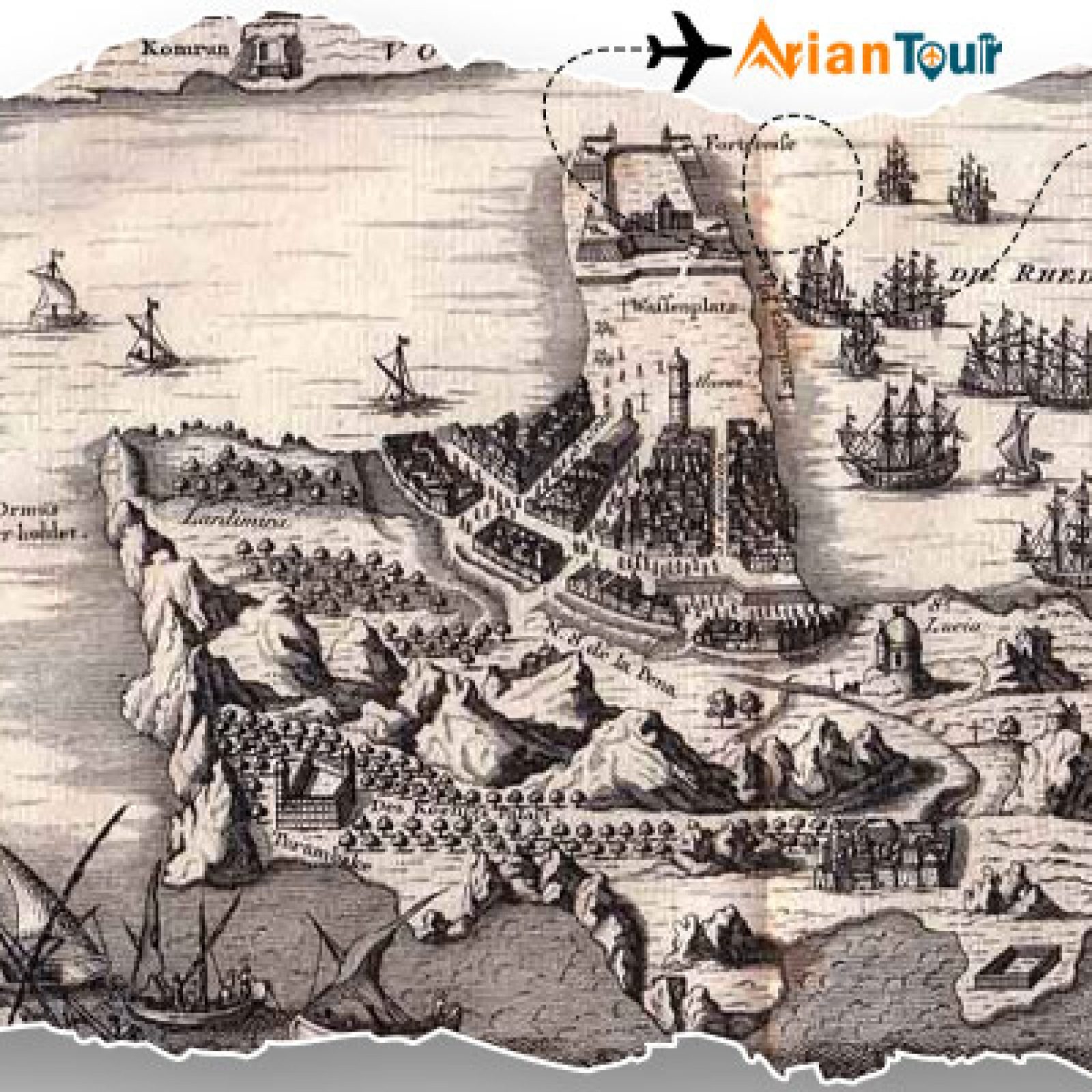
Hormuz once controlled the trade route between Europe and the Indies, and the ruined Portuguese Castle — raised in the early 1500s by Afonso de Albuquerque at the harbour's edge — is the reminder. Its red-stone bastions, cisterns and chapel make a fine spot for sunset over the strait. Around the little town, a lively art scene has taken root: colourful murals, craft workshops and seasonal festivals give the island a creative, welcoming feel you can meet first-hand through our craft and culture experiences.
Hormuz lies about eight kilometres off Bandar Abbas, reached by a short passenger ferry that takes roughly forty to fifty minutes. The season matters here: the Gulf is fiercely hot and humid from late spring through summer, so aim for the cooler, dry months from roughly November to March, when days are warm and pleasant. Getting around is easy by local minibus, tuk-tuk or bicycle. A single day covers the main sights on a loop of the island, but staying two or three nights — including a night under the stars — lets Hormuz work its quiet magic. For visas, money and practical questions, see our travel FAQ.
Hormuz combines naturally with Bandar Abbas, Qeshm and the resort island of Kish for a southern, sun-and-sea leg of a wider Iran trip, and it's easy to fold into a private, tailor-made itinerary. When you're ready, our local experts will build an unhurried route around your dates, the season and the sights you most want to see — just tell us when you'd like to travel and we'll handle the rest.
Published by Arian Tour — Iran travel specialists. Ferry times, opening hours and seasonal conditions can change; we confirm every detail when planning your trip.
 Plan Your Visit
We'll build a private, tailor-made itinerary around the season and the sights you most want to see.