
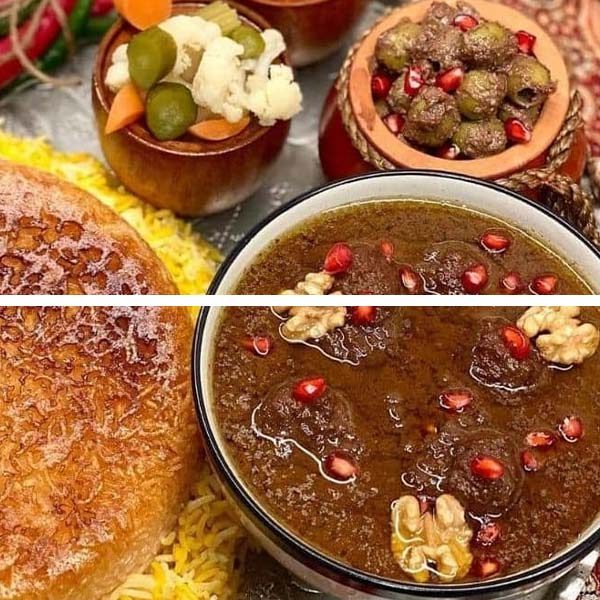
Glossy, dark and gently sour-sweet — the story of the celebration dish that tastes of the Caspian forests.
Of all the dishes that crowd a Persian table, few inspire as much quiet devotion as fesenjan. Spelled fesenjan, fesenjoon or khoresh-e fesenjan, it is a thick, glossy stew the colour of dark chocolate, built from just two great ingredients of northern Iran — ground walnuts and pomegranate. Sweet, tart and deeply savoury all at once, it is the kind of dish families reserve for the people and the occasions they love most.
Fesenjan was born in Gilan, the lush green province along the southern shore of the Caspian Sea. This is one of Iran's most fertile corners, where walnut groves and pomegranate orchards thrive in the humid, forested climate — and, traditionally, where ducks were plentiful. It is no accident that the dish comes from here: fesenjan is essentially the landscape of the Iranian north reduced to a single pot. If you travel through the Caspian region and the north, you taste the same walnuts and sour fruit in dozens of local specialities.
Persians have paired walnuts and pomegranate in savoury cooking for a very long time. Fesenjan is often linked to the Sassanid era, and food historians point to its role as a festive, celebratory dish rather than everyday fare, with detailed recipes appearing in nineteenth-century Persian cookbooks. To this day it carries that sense of occasion: fesenjan is a classic of wedding banquets and is one of the warming dishes that grace the table for Yalda night and Nowruz, when families gather to mark the longest night of the year and the spring new year.
Fesenjan is the landscape of the Iranian north — walnut groves and pomegranate orchards — reduced to a single, glossy pot.
The technique is patient rather than complicated. Walnuts are ground fine and toasted, then simmered slowly until their oils release and the sauce turns thick and dark. Pomegranate molasses — rob-e anar, the reduced sour-sweet syrup of the fruit — gives the stew its signature tang and ruby-brown depth. Cooks balance the two with a little sweetness, often a touch of saffron, and let it bubble gently for an hour or more. Traditionally fesenjan was made with duck, fitting for Gilan; today it is more often cooked with chicken, and some southern versions lean sweeter while northern ones stay boldly sour. It is almost always served over fluffy Persian rice.
You will find fesenjan on menus across Iran, but it shines closest to its roots — in the home-style restaurants of Gilan and the family kitchens of the north, and at the traditional eateries tucked inside the country's great covered bazaars. Sharing a pot of slow-cooked fesenjan with rice, fresh herbs and a glass of doogh is one of the warmest introductions to Persian hospitality you can have. Our food and bazaars tour is built around exactly these moments — market mornings, cooking traditions and long, unhurried lunches.
A dish like fesenjan is a reminder that travelling in Iran is as much about the table as the monuments. If you'd like your trip to weave in the Caspian north, a home-cooked meal or a guided market visit, our specialists can fold it into a tailor-made route — see our travel FAQ for questions on the practical side, or simply tell us your dates and we'll plan a journey that feeds the senses as well as the imagination.
Published by Arian Tour — Iran travel specialists. Regional recipes and ingredients vary; we love helping travellers find the most authentic local version.
 Plan Your Visit
From the walnut groves of Gilan to the bazaars of Isfahan, we'll build a private, food-led itinerary around you.