
Some countries you remember by their monuments. Iran you remember by its colours — turquoise, cobalt, rose and gold, scattered across domes, tiles and morning light.
Travel through Iran for even a few days and you start to see the country as a painter might: in colour. Persia has spent more than a thousand years perfecting the art of surface — glazing, mirroring, weaving and dyeing — until whole buildings shimmer like jewellery. This is a journey told mostly in pictures, a wander through the hues that give Iran its unmistakable glow. Save it for inspiration, then let us help you stand inside these places yourself.
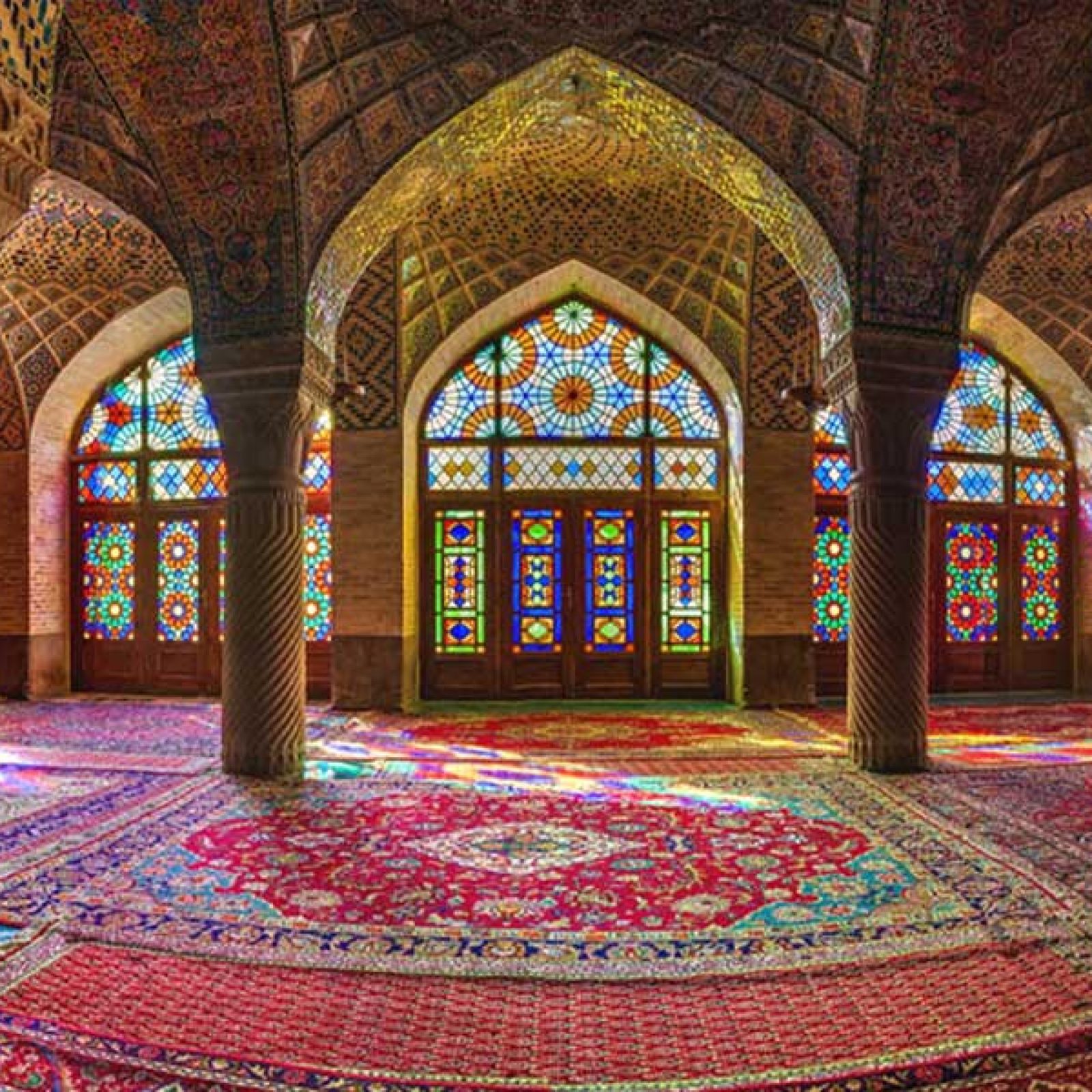
No image captures Iran's love of colour better than the Nasir al-Mulk Mosque in Shiraz — the "Pink Mosque." Its western prayer hall is fronted by hundreds of stained-glass panes, and on a clear morning, roughly between 8 and 10am, low sun pours through them and scatters across the carpets like a kaleidoscope. The effect is fleeting; by midday it fades. Arrive early, sit quietly, and watch the floor turn to confetti. It is the single most photographed interior in the country, and it sits at the heart of our Shiraz wanderings.
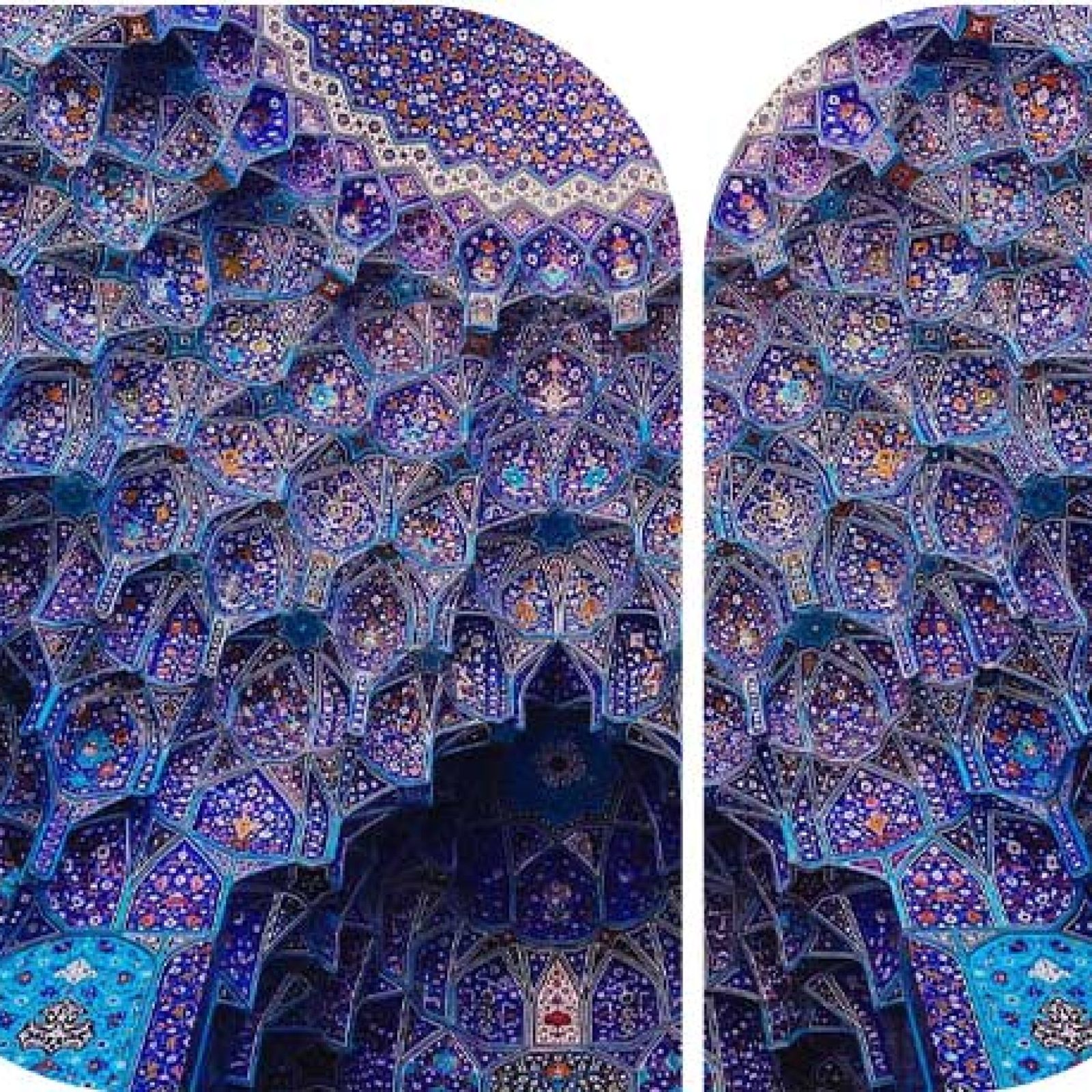
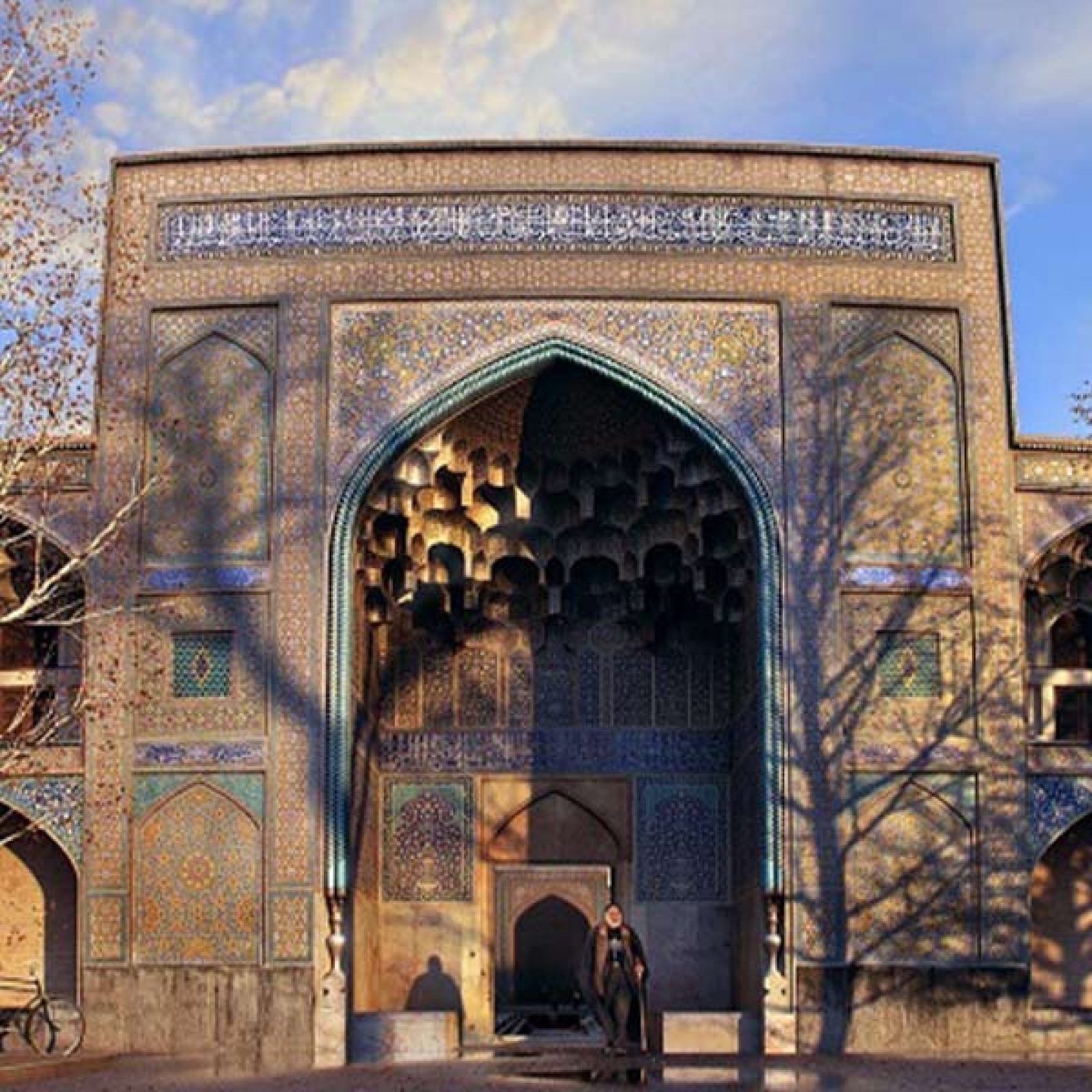
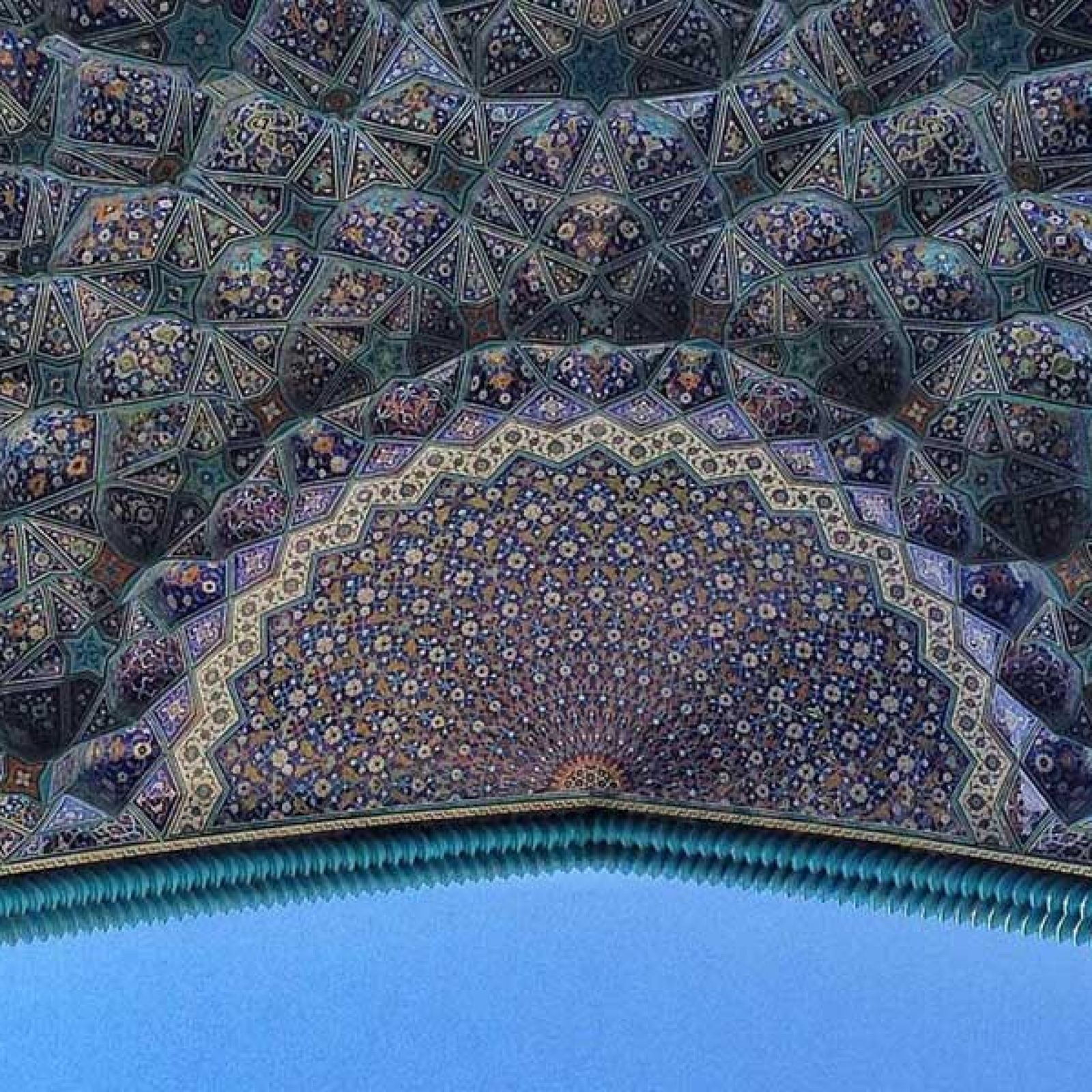
If one colour belongs to Iran above all others, it is turquoise — the blue-green of a desert sky that Persian artisans fixed forever into glazed tile. Nowhere does it sing louder than in Isfahan, where the great dome of the Shah (Imam) Mosque rises over Naqsh-e Jahan Square in waves of cobalt and turquoise arabesque. Much of the mosque is clad in haft-rang, the "seven-colour" tile technique perfected in the Safavid era, in which painters worked black, white, ultramarine, turquoise, red, yellow and fawn onto each tile before firing. The result is a building that changes character with the hour and the light. Explore it on our Isfahan pages.
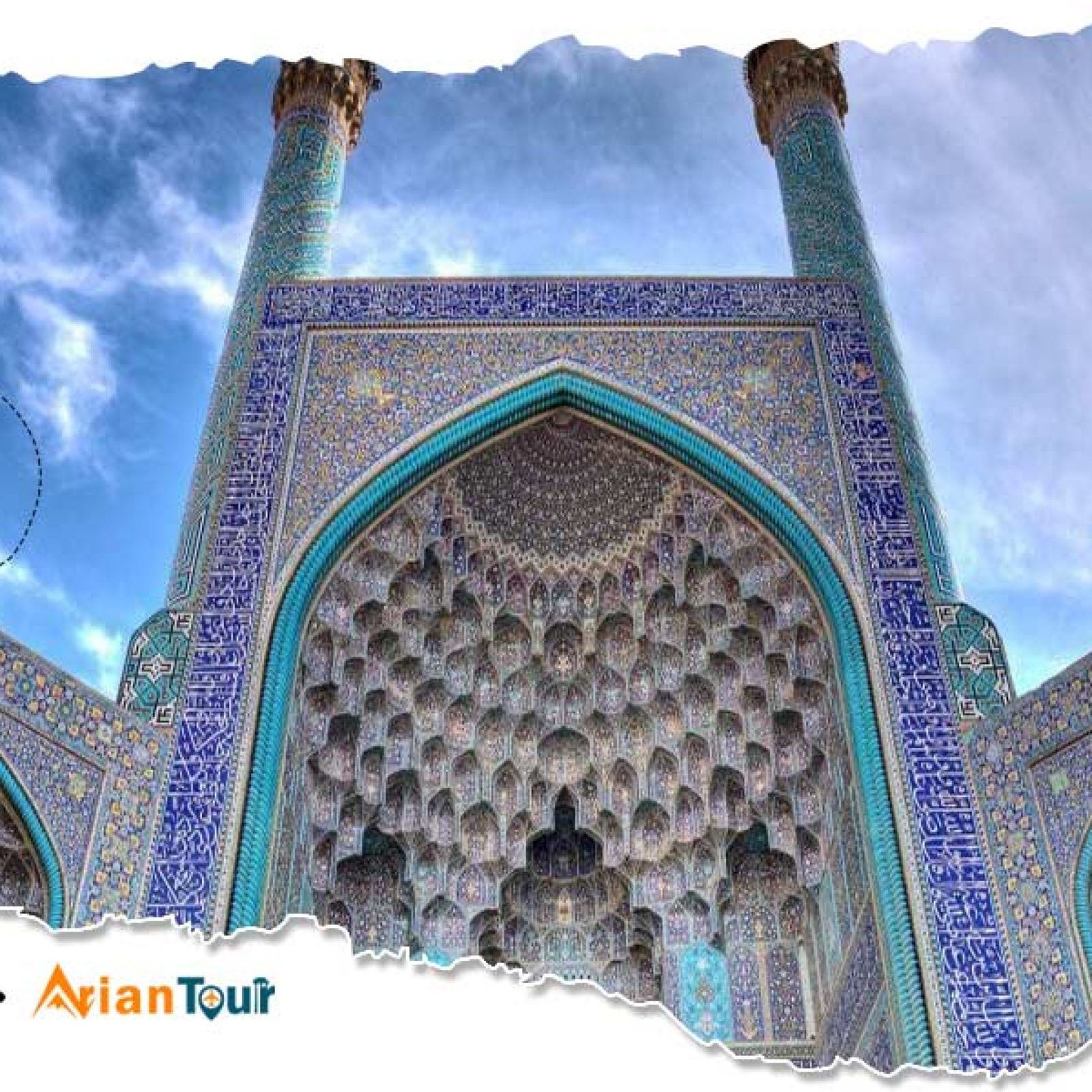
Persian artisans named seven colours for their tiles — but in the right light, a single dome seems to hold a hundred.
Look closely at any Iranian tile wall and the colour resolves into order: interlocking stars, blossoming vines, calligraphy curling like smoke. Persian decoration almost never depicts people; instead it builds endless geometric and floral rhythms that draw the eye inward and upward. Once you learn to read these patterns you see them everywhere — on fountains, gateways, prayer niches and the humblest courtyard. The craft traditions behind them are alive and well, and you can watch tile-cutters and other artisans at work among our cultural craft experiences.
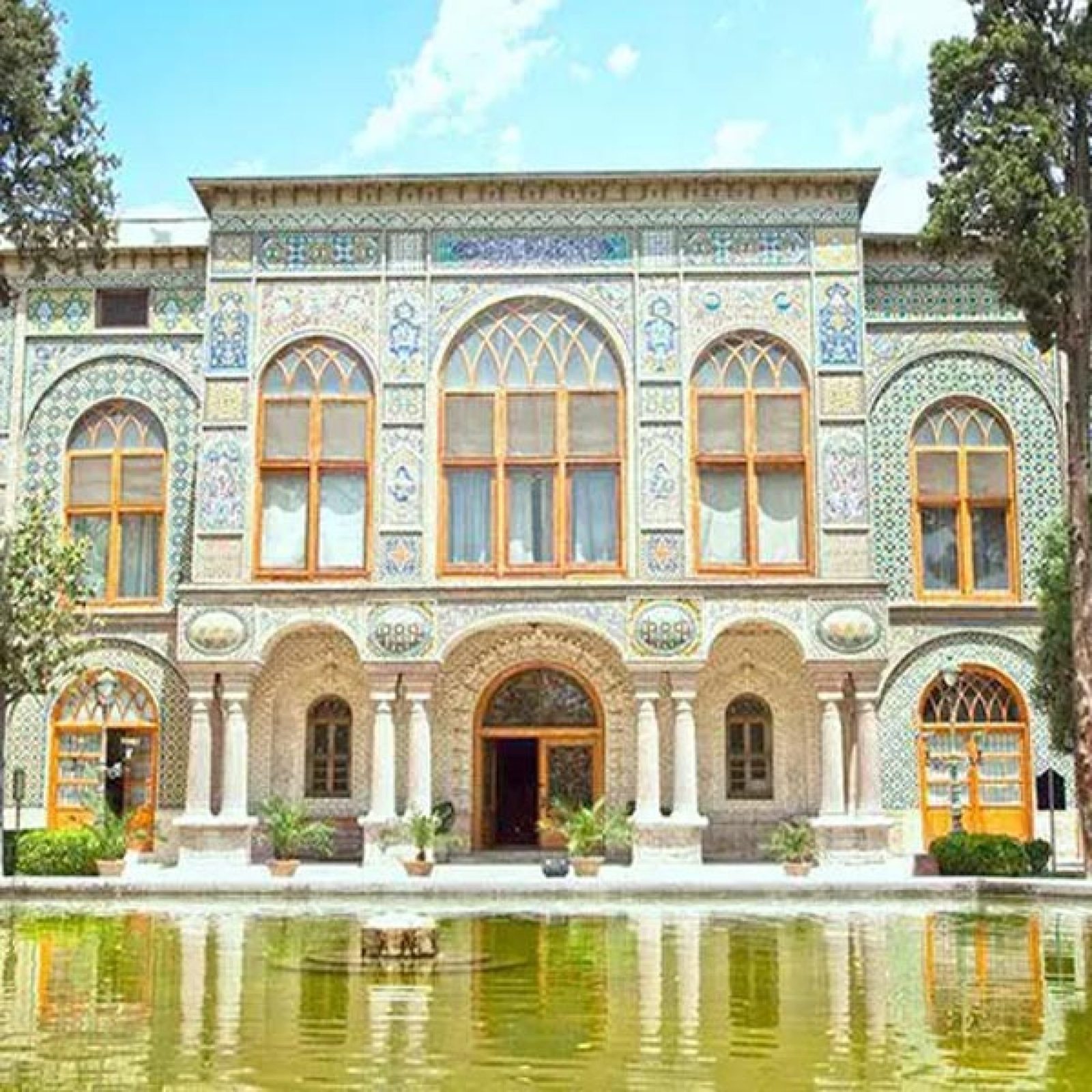
Colour in Iran is not only blue. In Tehran's Golestan Palace — the Qajar royal complex and a UNESCO World Heritage Site — bright glazed tiles climb the outer walls in pinks, yellows and greens, while inside, halls are sheathed entirely in cut mirror that turns daylight into a million glittering fragments. It is exuberant, theatrical and a complete change of key from the serene mosques of the south. See it on our Tehran pages.
Persian colour spills outdoors, too. The classical Persian garden — the chahar bagh, or "four gardens" — sets cool green against the dry plateau, with water channels, cypress and roses arranged in calm symmetry; the very word "paradise" descends from an Old Persian term for such a walled garden. And in the covered bazaars of Isfahan, Shiraz and Tehran, colour turns commercial: pyramids of saffron and barberries, bolts of termeh brocade, stacks of carpets and the warm gleam of copper. Lose an afternoon among them on our bazaar experiences.
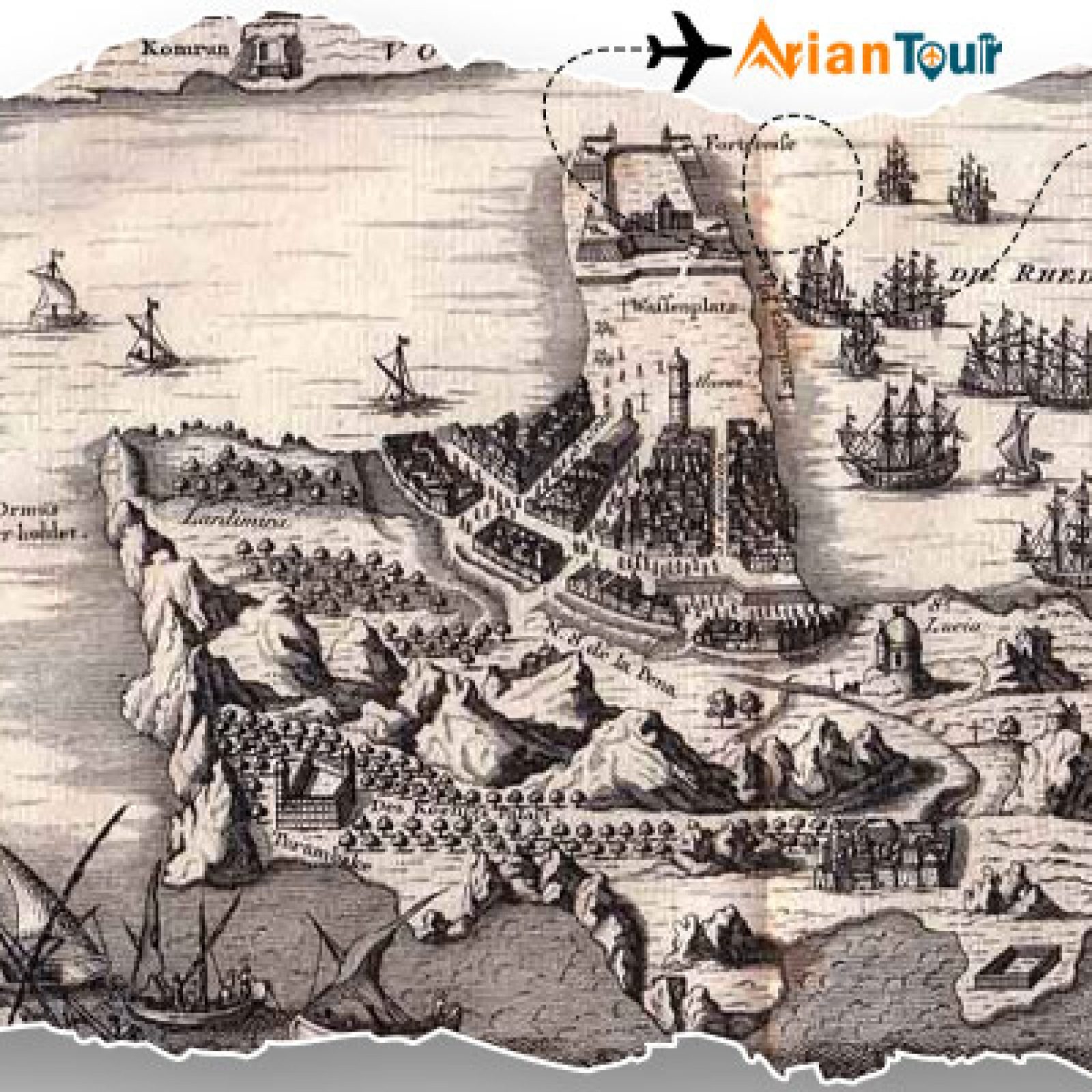
For Iran's most surreal palette you must leave the cities entirely and sail to Hormuz, a small island in the Persian Gulf where the very ground is coloured. Mineral-rich soils streak the hills in ochre, red, gold and even a famous edible red clay, and the beaches glitter with metallic sand. It feels less like a landscape than a spilled paintbox — a fitting final stop on a journey through the colours of Iran. Hormuz and the Gulf coast feature in our nature and tailor-made itineraries.
These are only a handful of Iran's colours; the country keeps more than any single trip can hold. If these images have stirred something, see our Classic Persia journey or read practical pointers in our travel FAQ. Better still, tell us which of these places you most want to stand inside, and we'll build a private itinerary around them: plan my trip.
Published by Arian Tour — Iran travel specialists. Light, opening hours and seasonal access change through the year; we confirm the best times to visit each site when planning your trip.
 Plan Your Visit
We'll build a private, tailor-made itinerary around the sites, the seasons and the light — so you arrive when each place is at its most beautiful.