
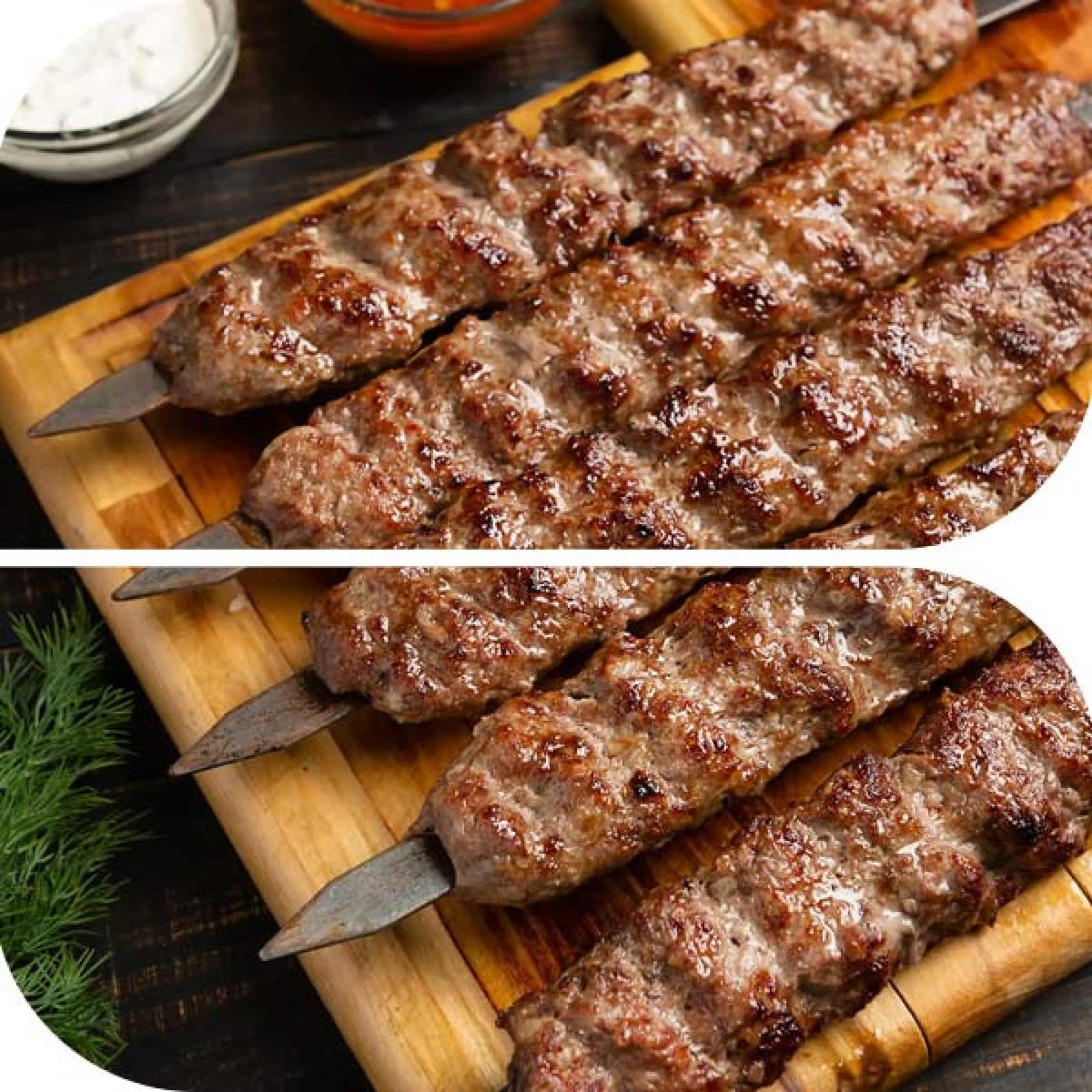
Saffron rice, char-grilled koobideh, a knob of butter and a shake of sumac — the meal that unites the whole country.
Ask Iranians to name the one dish that belongs to everyone, and the answer comes quickly: chelo kabab. Sometimes written chelow kabab, the name simply means "rice and kabab" — a mound of buttered, saffron-scented Persian rice served alongside skewers of char-grilled meat. It is the country's national dish, equally at home in a white-tablecloth restaurant, a smoky bazaar kitchen, and a Friday lunch in the family garden. Few plates say more about how Iranians love to eat.
For all its ubiquity, chelo kabab is not ancient. Food historians trace it to the Qajar era of the nineteenth century and, in particular, to the court of Naser al-Din Shah, who is said to have grown fond of a grilled-meat dish encountered on his travels and asked his cooks to adapt it with Persian rice and seasonings. What began as an aristocratic delicacy, served at palace celebrations, soon spread to the bazaars, where shopkeepers and merchants made it their midday ritual. From those market kitchens it travelled to every corner of the country — and never left.
The kabab most people picture is koobideh, from a Persian word meaning "pounded": seasoned minced meat, traditionally lamb or beef mixed with grated onion, pressed by hand onto flat, wide skewers and grilled fast over glowing charcoal until juicy within and lightly charred at the edges. It shares the grill with barg (thin fillets of marinated lamb) and joojeh (saffron-yoghurt chicken), but koobideh is the everyday hero. Watching a skilled cook shape and turn the skewers is a small piece of theatre you can catch in almost any of Iran's covered bazaars.
Chelo kabab began as a delicacy of the Qajar court and became, within a generation, the food of every Iranian bazaar and home.
Half the pleasure is in the ceremony. The rice arrives first, fluffy and pale gold, often crowned with a pat of butter and — in the old-school way — a raw egg yolk that the heat of the rice gently cooks as you stir it through. Grilled tomatoes come alongside, their skins blistered and sweet, and a shaker of tangy purple sumac sits ready to scatter over the meat. When the skewers land, you press a piece of flatbread over the kabab and slide the skewer free. The classic drink to wash it down is doogh, a cool, minty yoghurt drink that cuts the richness perfectly. It's hearty, generous eating — one of the warmest expressions of Persian food and hospitality.
You will find chelo kabab everywhere, but the great old kababis of Tehran are a rite of passage, some serving the same recipe to the same families for generations. In Isfahan and Shiraz, garden restaurants pair it with fountains and shade; in smaller towns, roadside grills send charcoal smoke drifting across the street at lunchtime. Wherever you sit down, the rhythm is the same — rice, butter, sumac, smoke and good company. It is the taste travellers most often carry home from Iran.
A plate of chelo kabab is the easiest way to understand why Iranians treat mealtimes as an event, not an errand. Our Food & Bazaars tour is built around exactly these moments — market mornings, charcoal grills and long, unhurried lunches — and we can fold a great local kababi into any tailor-made itinerary. For the practical side of travelling and eating in Iran, see our travel FAQ, or simply tell us your dates and we'll plan a journey that feeds the senses as well as the imagination.
Published by Arian Tour — Iran travel specialists. Regional recipes and serving styles vary; we love helping travellers find the most authentic local version.
 Plan Your Visit
From the kababis of Tehran to the bazaars of Isfahan, we'll build a private, food-led itinerary around you.