
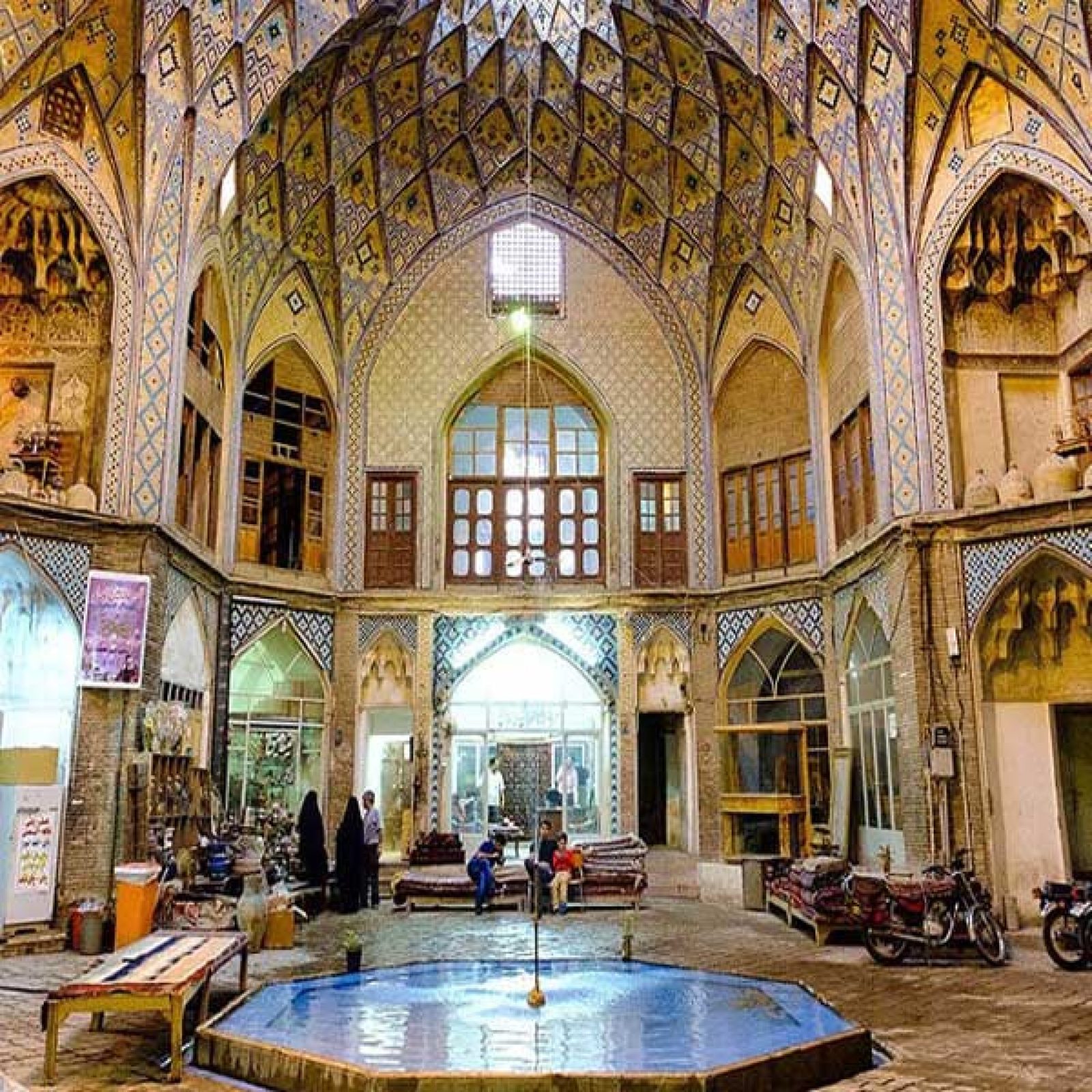
Iran's bazaars are treasure houses of craft perfected over centuries. Here's what to look for — and the cities where you'll find the finest of each.
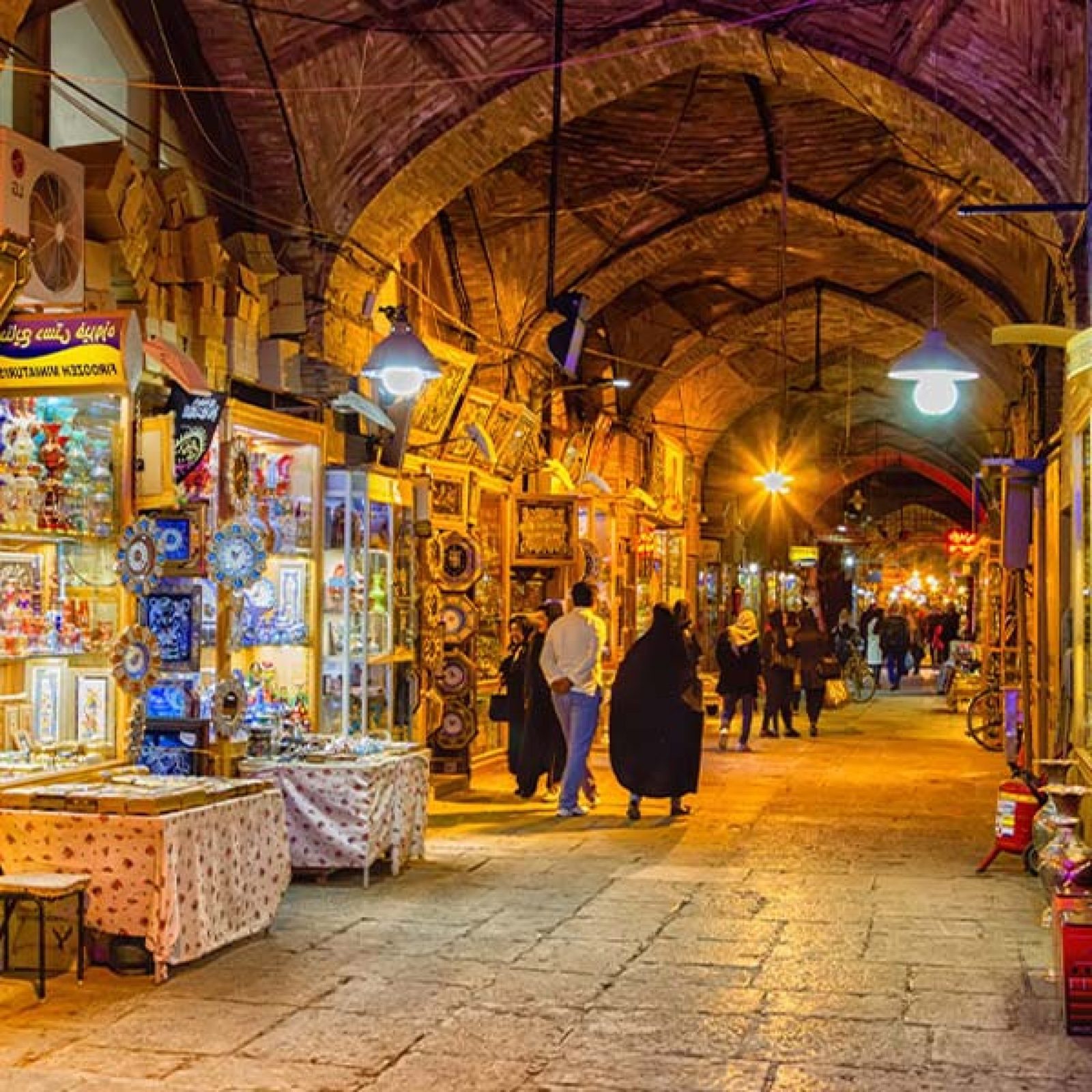
Few countries make souvenir shopping as rewarding as Iran. Behind every stall in a great Persian bazaar sits a lineage of artisans, and many of the crafts you'll see are recognised by UNESCO's World Crafts Council — Isfahan alone is registered as a world craft city for more than a hundred living traditions. Whether you have space for a rolled carpet or only a corner of a suitcase, here are the eight souvenirs most worth carrying home, and where to buy them well. Browse our full range of markets and workshops in our bazaar experiences before you go.
The hand-knotted Persian carpet is the country's most famous export and, for many travellers, the ultimate souvenir. Each weaving town has its own signature: Tabriz for fine, formal medallions, Kashan and Qom for silk, Kerman for soft palettes, and the nomadic Qashqai and Bakhtiari for bold, tribal geometry. Flat-woven kilims and gabbeh rugs are lighter, cheaper and easier to pack. Take your time, ask to see a piece unrolled in daylight, and buy from an established dealer who can arrange shipping and documentation. Isfahan and Shiraz both have superb carpet quarters — see them on our Isfahan and Shiraz destination pages.
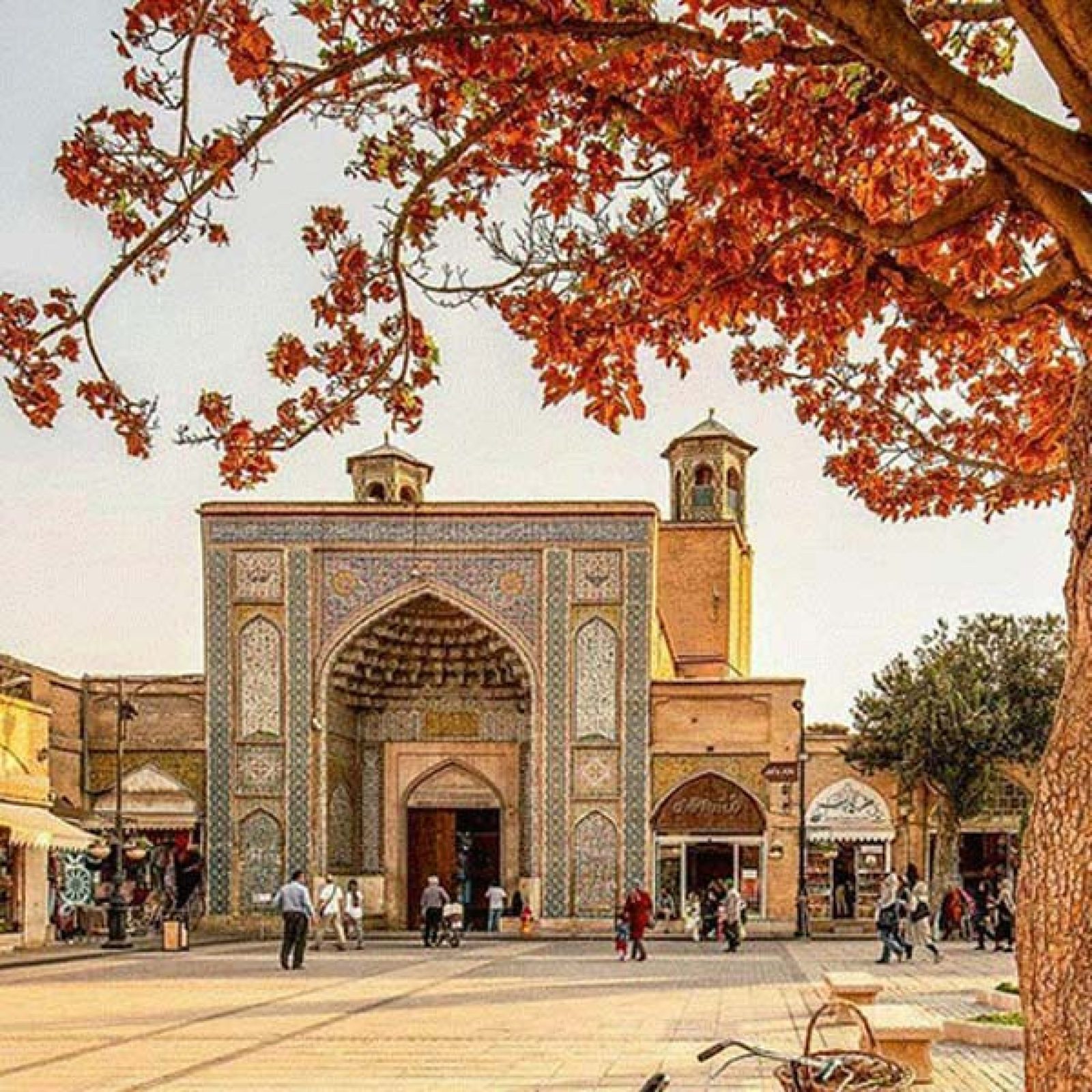
Termeh is a luxurious handwoven textile, traditionally silk and wool, patterned with the swirling boteh (paisley) motif that originated in Persia. Yazd is its historic home, and a length of termeh makes an elegant table runner, cushion cover or wrap that folds flat into any bag. Look for the density of the weave and the sheen of the threads — the best pieces feel substantial and glow softly in the light.
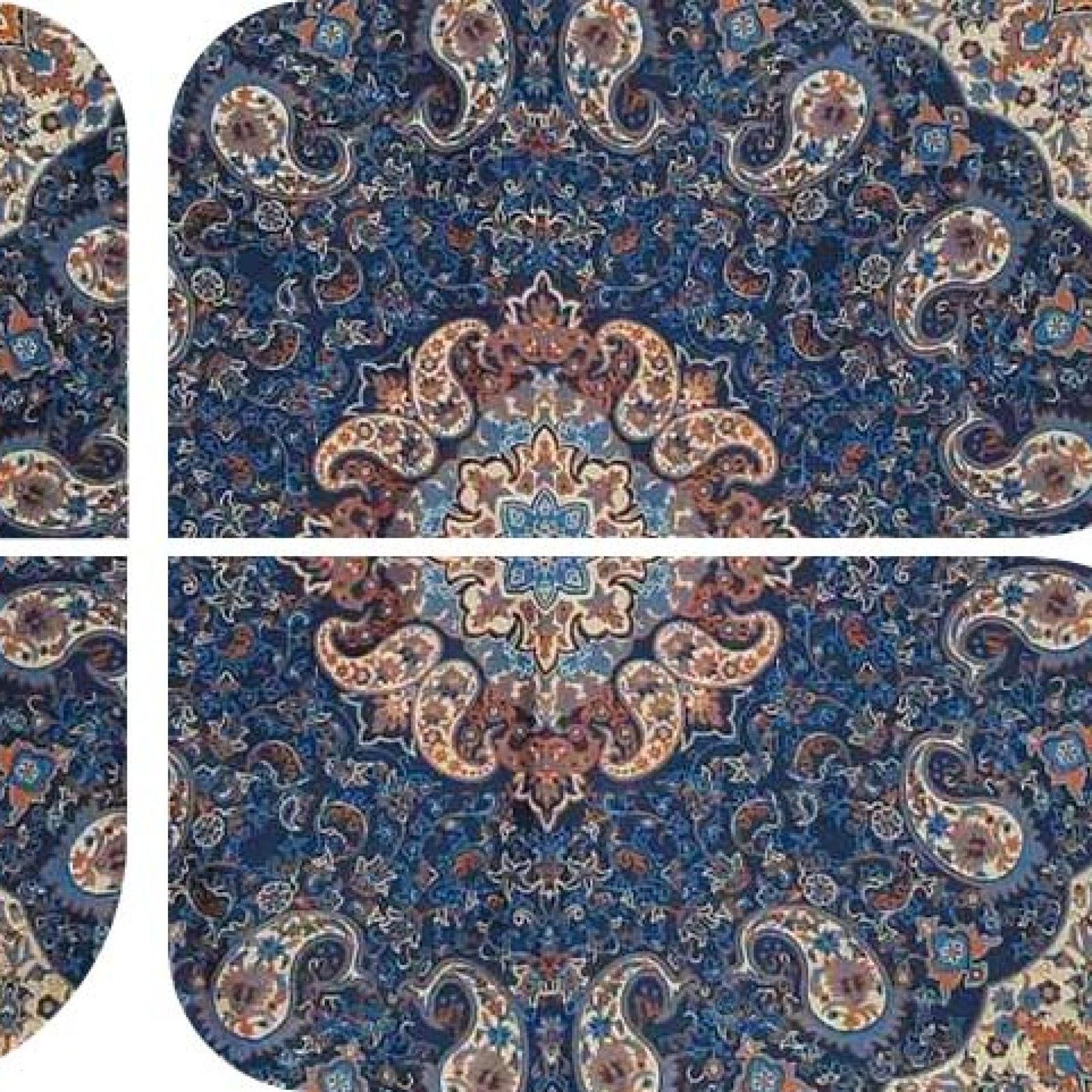
Khatam is one of the most painstaking of all Persian crafts: thousands of minuscule triangles of wood, brass and camel bone are bundled, sliced and laid into star-burst mosaics across boxes, frames, backgammon sets and pens. Shiraz is the acknowledged centre, and a small khatam box is a light, sturdy and genuinely special gift. Run your fingertip over the surface — on a fine piece the pattern is perfectly smooth, with no ridges between the fragments.
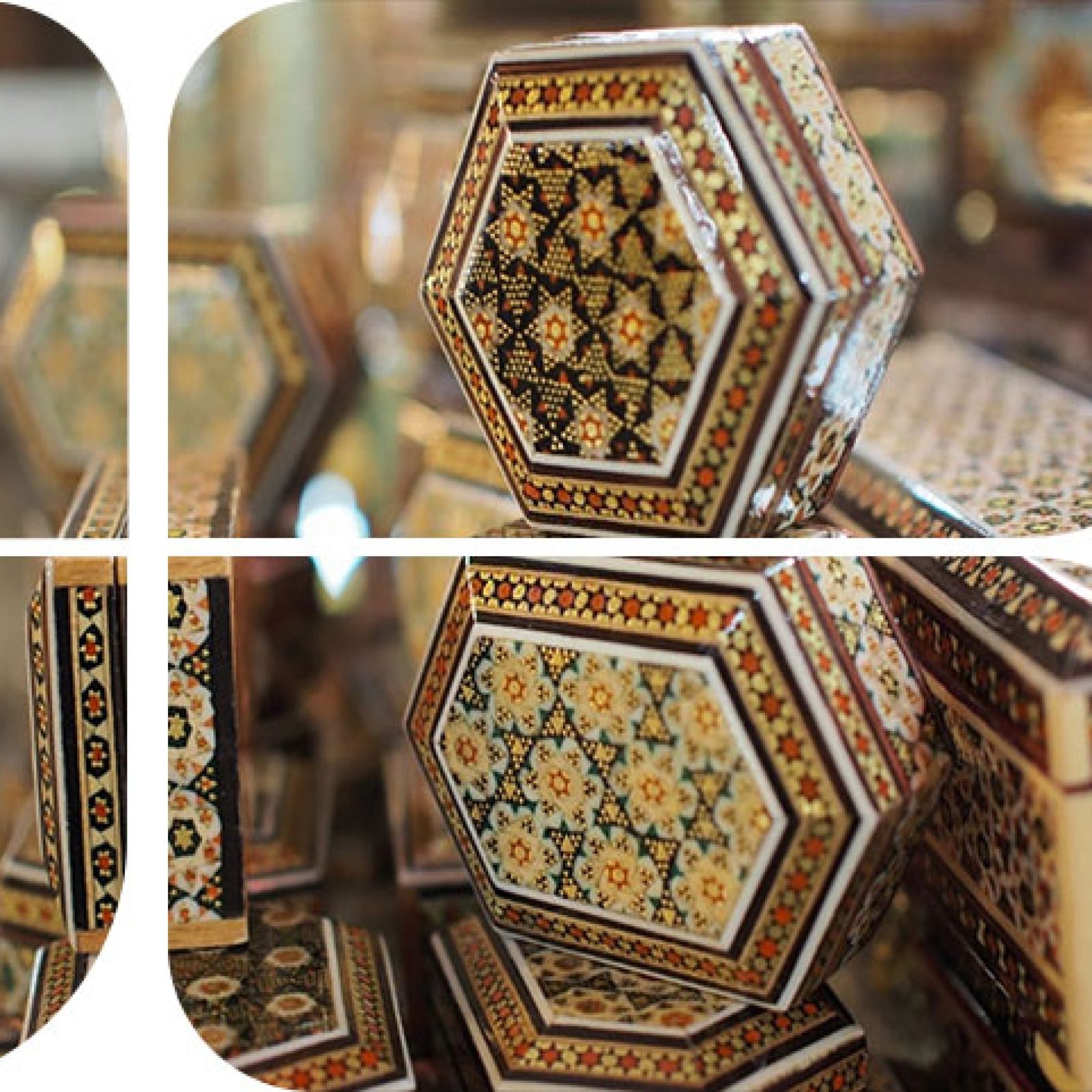
Minakari is the art of fusing vivid enamel — most often a deep cobalt blue — onto copper, then hand-painting it with fine floral arabesques before firing. Isfahan is the beating heart of the craft, and enamelled bowls, plates and vases are among the most striking things you can bring back. Because each piece is fired and painted by hand, no two are quite alike. You'll find the finest workshops around Isfahan's Naqsh-e Jahan Square, a highlight of our Food & Bazaars journey.
In the ateliers ringing Isfahan's grand square you'll hear the steady tap of ghalamzani — copper, brass and silver hammered and chiselled into dense, swirling reliefs. Trays, goblets and decorative plates are the classic forms. It's heavier than most souvenirs, so pick one standout piece rather than a set, and ask the artisan to wrap it well for the journey. Watching the engravers at work is a memory in itself; we build these workshop visits into our craft experiences.
Persian miniature painting — intricate, jewel-bright scenes of gardens, hunts and poetry — is a UNESCO-listed art with centuries of history. You'll find miniatures on paper, on bone and on lacquered papier-mâché boxes and mirror frames. Small, flat and light, a framed miniature is one of the easiest fine souvenirs to carry. Buy from a reputable gallery so you know whether a piece is fully hand-painted or a printed reproduction.
Qalamkar is Isfahan's traditional hand block-printed cotton, stamped with carved wooden blocks in madder red, indigo and black to create tablecloths, bedspreads and scarves. It's affordable, packs down to nothing, and brings a bit of Persian pattern into everyday life at home. Pair it with a length of termeh and you have gifts for half your list.
If you'd rather bring back flavour than objects, Iran delivers. It is the world's leading producer of saffron, and a small box of deep-red threads travels beautifully. Add a bag of Kerman pistachios, some barberries, or boxes of regional confections — gaz nougat from Isfahan, sohan brittle from Qom, and rosewater sweets from across the country. These make perfect edible gifts and are a delicious thread through our food experiences. Keep receipts and original packaging for a smooth trip through customs.
The joy isn't only in the object — it's in meeting the maker, in a workshop that has practised the same craft for generations.
A few habits go a long way. Browse before you buy, so you learn the going range for quality and price; gentle bargaining is expected in bazaars but should stay friendly. Carry cash, as international cards don't work in Iran — see our notes on money and practicalities. For anything valuable, ask about authenticity, materials and shipping, and get it in writing. And remember that the best souvenir is often the story: buy where you've watched the work being done. Our guides know the honest workshops in each city and can translate, advise and help you pack.
Ready to shop Persia's bazaars with someone who knows them inside out? Tell us what you love and we'll weave the right markets and workshops into a private, tailor-made journey: plan my trip.
Published by Arian Tour — Iran travel specialists. Craft quality, prices and workshop access vary; we confirm reputable makers and current details when planning your trip.
 Plan Your Visit
We'll build a private, tailor-made itinerary through Iran's finest bazaars and craft workshops — with guides who know the honest makers.