
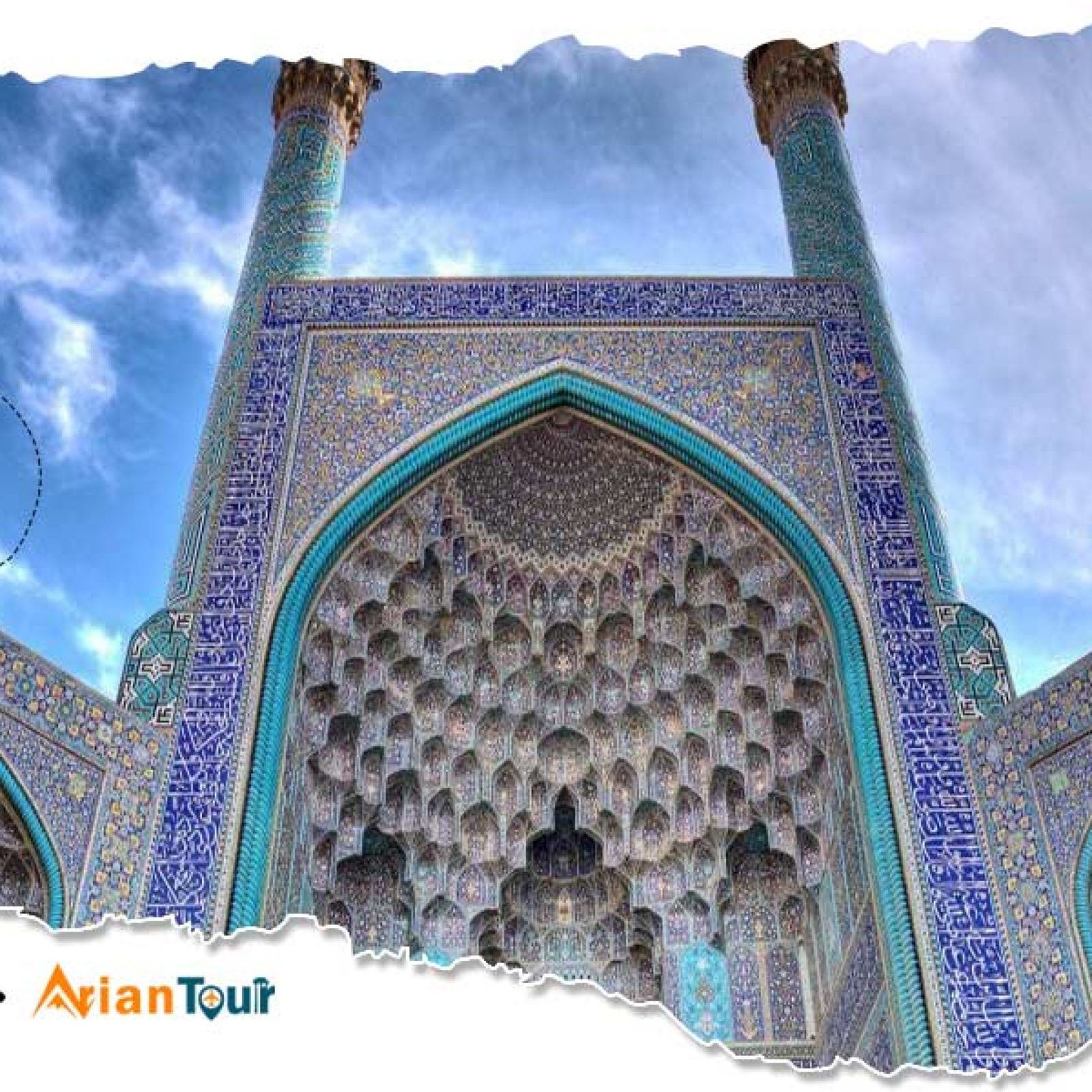
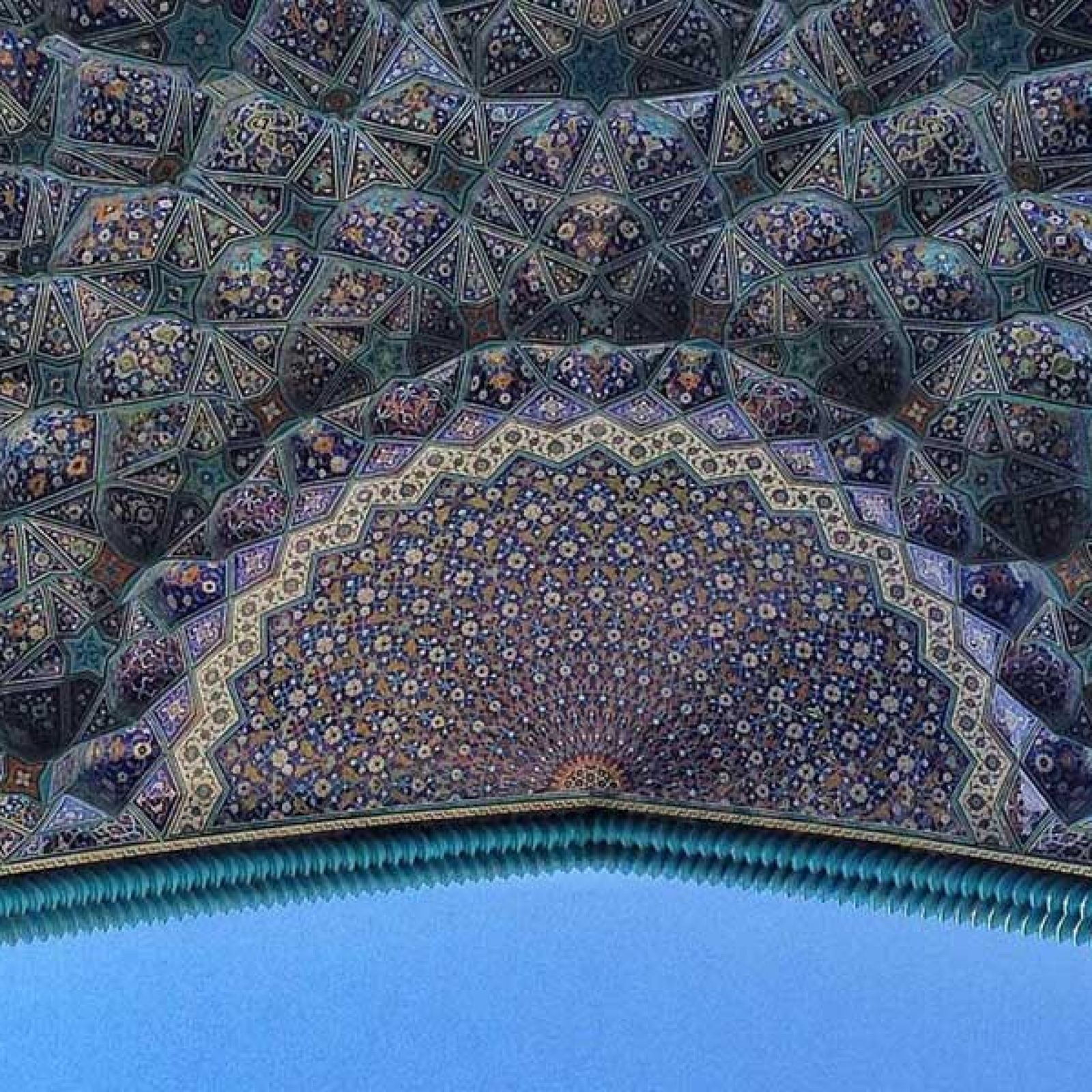
Kaleidoscopic stained glass, honey-gold vaults, mirror-work domes and tilework so fine it looks stitched — Iran's historic mosques are among the most beautiful buildings on earth.
For more than a thousand years, the mosque has been the canvas on which Persian craftsmen poured their finest work — geometry, calligraphy, glazed tile and coloured light all brought together in a single soaring space. The result is a national treasury of architecture that ranges from intimate prayer halls glowing pink at dawn to vast royal squares crowned with turquoise domes. You needn't be religious to be moved by them; these are living works of art where the play of light, pattern and proportion still stops travellers in their tracks. Here are seven of Iran's most magnificent mosques and what makes each one unforgettable.
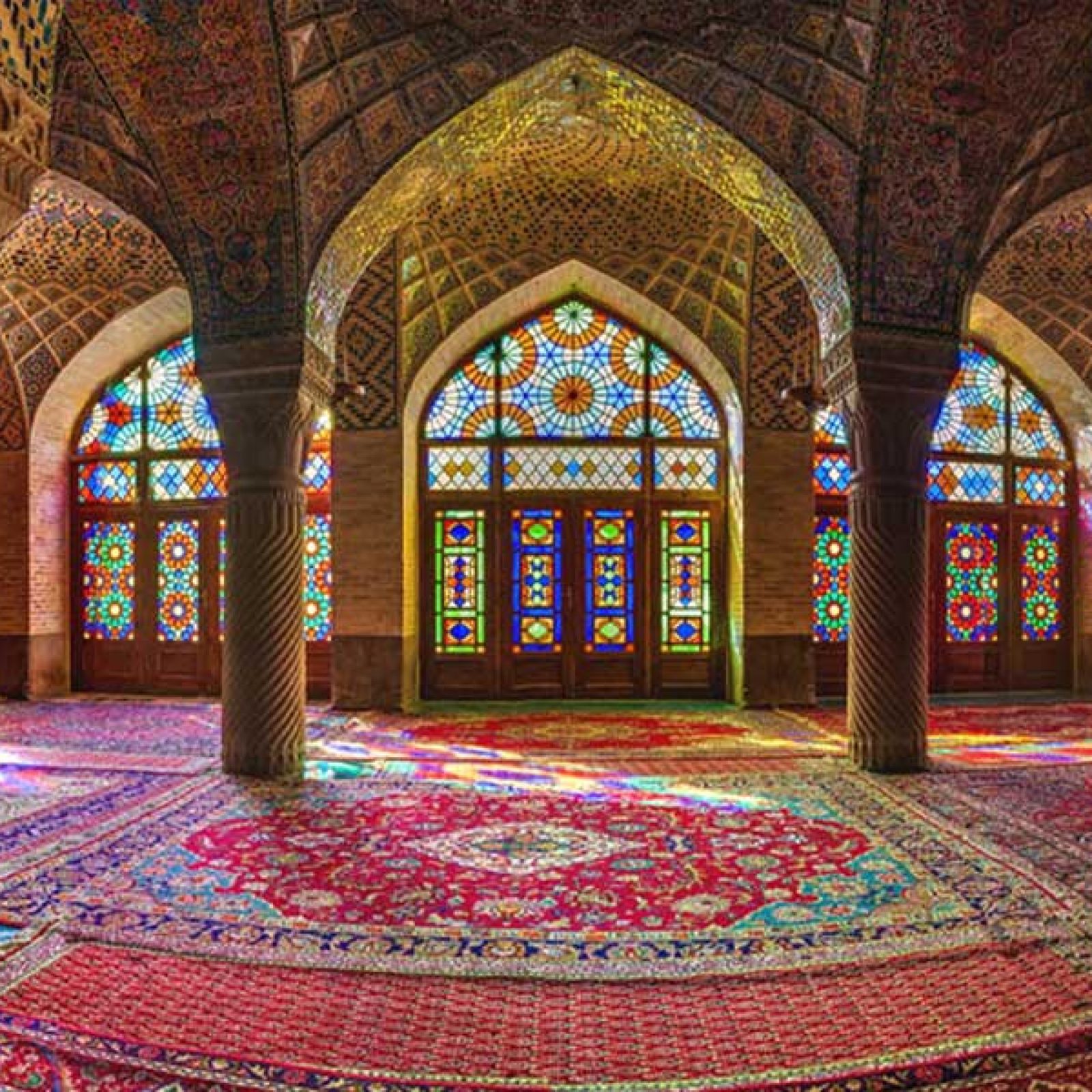
Built between 1876 and 1888 in the late Qajar era, the Nasir al-Mulk Mosque is the one image of Iran that has travelled the world. On clear winter mornings, low sun streams through a wall of stained glass and scatters pools of ruby, emerald and sapphire light across the carpets and columns of the western prayer hall — a spectacle that lasts only an hour or two. Come early, ideally soon after opening, to catch it at its most vivid before the crowds and the moving sun dissolve the colours. It's a highlight of any visit to Shiraz and a favourite on our craft and architecture experiences.
Commanding the southern end of Isfahan's monumental Naqsh-e Jahan Square, the Shah Mosque (also called the Imam Mosque) is the masterpiece of Safavid architecture, begun under Shah Abbas I in 1611 and completed after his death. Its towering entrance portal, sweeping seven-colour tilework and double-shelled dome are justly world-famous, and beneath that dome a single clap of the hands echoes back seven times. Together with the rest of the square it forms part of a UNESCO World Heritage Site. It anchors any tour of Isfahan and our Classic Persia journey.
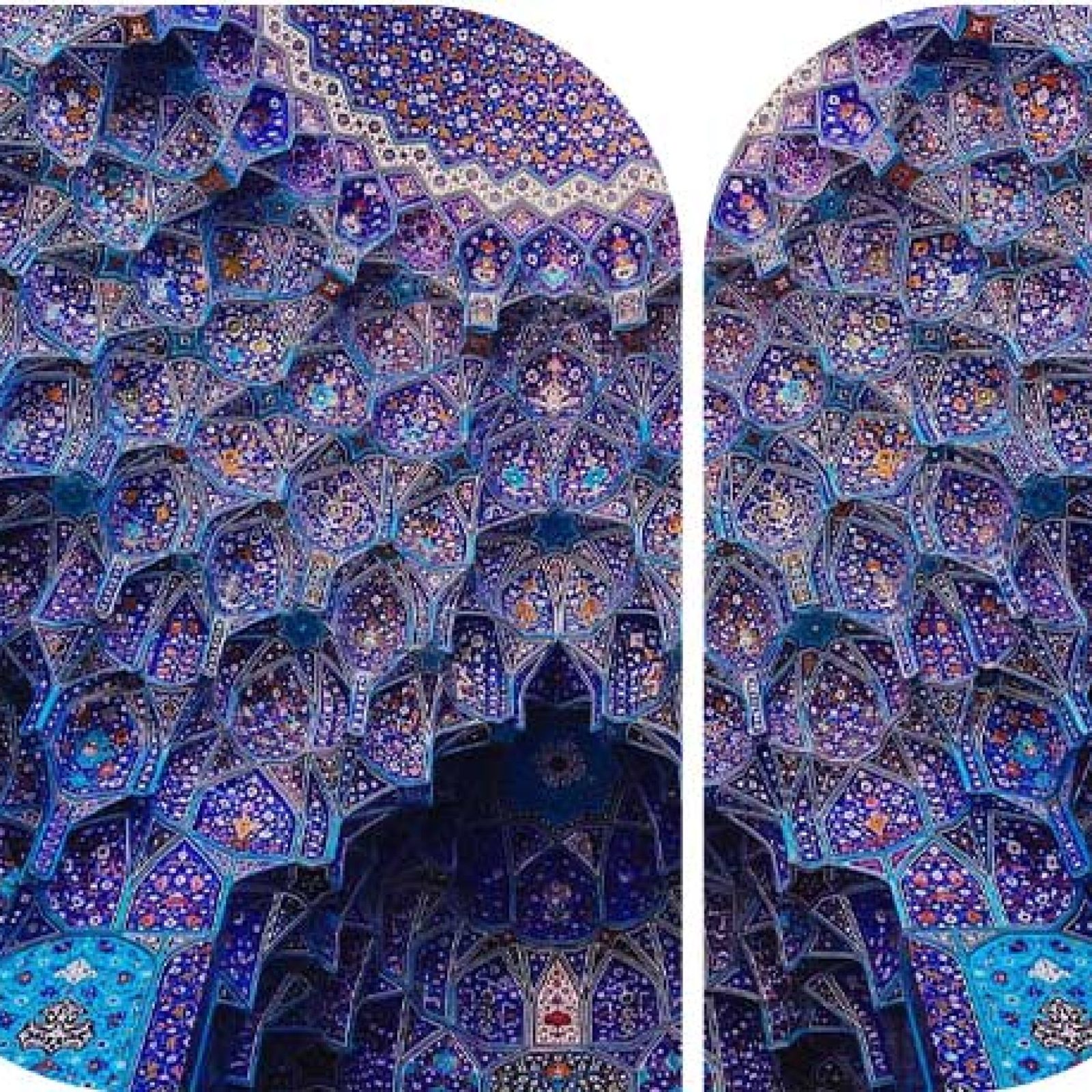
Facing the Shah Mosque across Naqsh-e Jahan Square, the smaller Sheikh Lotfollah Mosque (1603–1619) was built as a private oratory for the royal court, which is why it has no minarets and no courtyard. Step inside and the reason for its fame becomes clear: the pale, unglazed dome shifts from cream to deep rose as the day moves, and a lattice of tiled arabesques draws the eye toward a sunburst medallion at its peak. Many visitors call it the most perfect single interior in Iran. It sits a two-minute stroll from the square's other Isfahan landmarks.
If the square's mosques dazzle, the Jameh (Friday) Mosque of Isfahan astonishes in a quieter way: it is a living museum of twelve centuries of Iranian building, layered and rebuilt from the 8th century onward. Inscribed by UNESCO in 2012, it was the first mosque to adopt the four-iwan courtyard plan that went on to shape religious architecture across the Islamic world, and its two Seljuk-era domes and brick vaulting are studied by architects to this day. Wander its shadowy hypostyle halls to trace how Persian design evolved, then continue through the adjoining bazaar back toward the square.
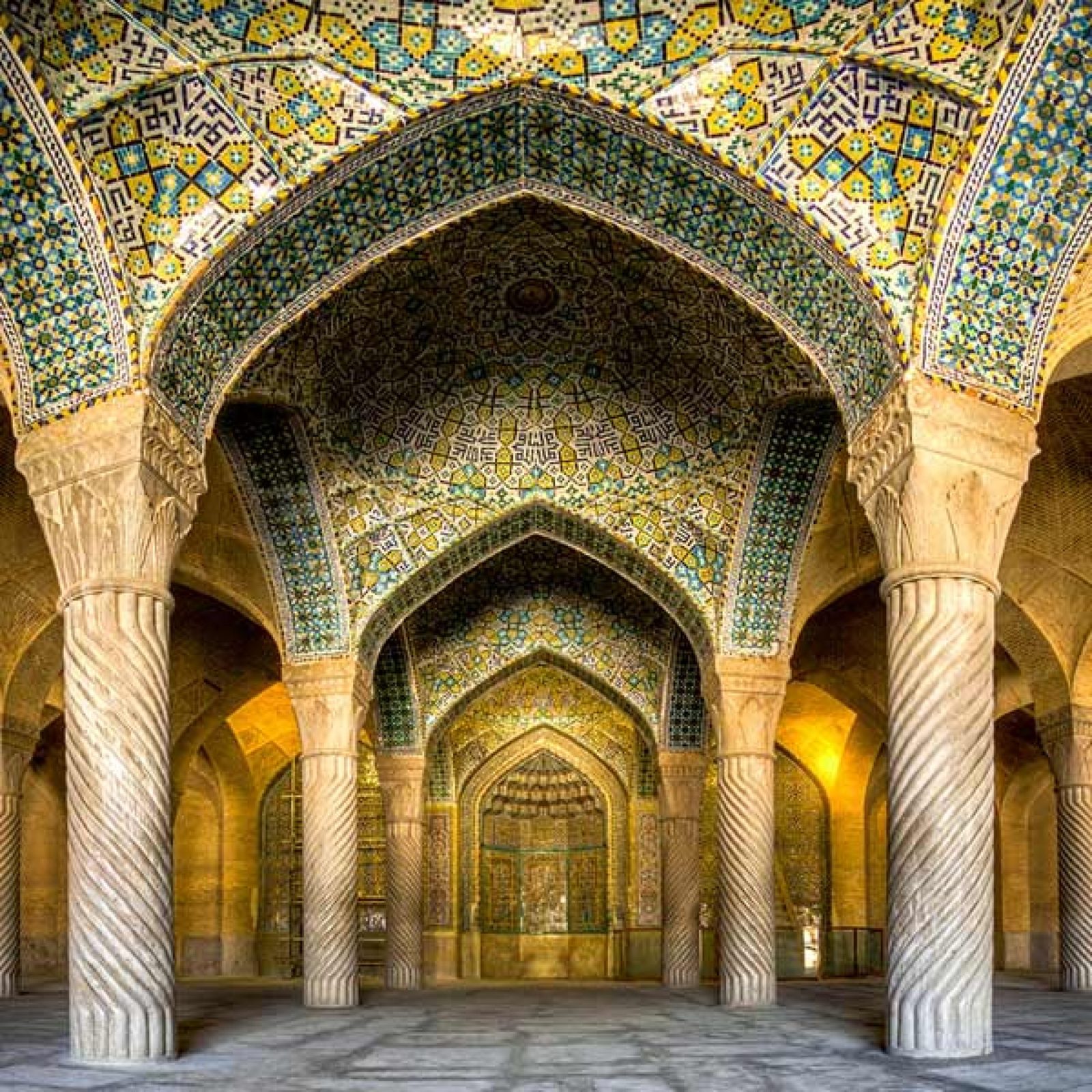
Commissioned by Karim Khan Zand in the 1770s as part of his royal complex, the Vakil Mosque is the elegant signature of the Zand era in Shiraz. Its night prayer hall is unforgettable — a forest of forty-eight spiralled stone columns supporting a brick-vaulted ceiling, lit softly through the day. Pink-and-yellow floral tiles, a finely carved marble pulpit cut from a single block, and a cool, unhurried atmosphere make it a lovely counterpoint to the grander mosques. It sits right beside the Vakil Bazaar and bathhouse, an easy highlight of our Food & Bazaars route.
Adjoining the vast shrine of Imam Reza in Mashhad, the Goharshad Mosque is one of the great works of Timurid architecture, completed in 1418 and named for its patron, Empress Goharshad, wife of Shah Rukh. Its deep-blue tiled iwan and dome are masterpieces of 15th-century Persian design, and because it stands within Iran's holiest pilgrimage complex, it hums with a devotion you feel the moment you arrive. Non-Muslim visitors are usually welcome to the outer courtyards with a guide; we can arrange respectful access as part of a wider eastern itinerary.
Rising above the mud-brick lanes of the desert city of Yazd, the 14th-century Jameh Mosque is crowned by the tallest pair of minarets in Iran and a soaring tiled portal covered in intricate blue faience — the image printed on Iran's own banknotes. Inside, a serene mihrab and mosaic dome reward the climb through the old town's covered alleyways and windcatchers. Visit in the late afternoon, when the tilework glows against a deepening sky, then linger for tea on a rooftop nearby. Yazd is a natural gateway to the dunes and oases of our Deserts & Oases journeys.
To stand beneath a Persian dome and watch the light move across the tiles is to understand why, for centuries, travellers have called Iran the most beautiful country they have ever seen.
Modest dress is required at every mosque: women should carry a headscarf and cover arms and legs, and both men and women should avoid shorts. Shoes come off before you step onto the carpets, and it's respectful to keep clear of people at prayer and to ask before photographing them. Timing rewards the patient — dawn for the Pink Mosque's colours, late afternoon for Yazd's glowing minarets. Fridays and prayer times can be busier, and some shrines have separate men's and women's entrances. For more on etiquette, dress and planning, see our travel FAQ.
Ready to see these masterpieces for yourself? Tell us your dates and our local experts will weave the mosques, monuments and moments of light you most want to witness into a private, tailor-made itinerary — just plan your trip with us.
Published by Arian Tour — Iran travel specialists. Opening hours, holidays and access to religious sites can change; we confirm everything when planning your trip.
 Plan Your Visit
We'll build a private, tailor-made itinerary around the architecture, light and craftsmanship you most want to discover.